

Caviar offers a distinctive flavor that combines richness, salinity, and delicate marine notes in a surprisingly smooth bite. If you are wondering what does caviar taste like, expect subtle variations depending on the species, texture, and quality of the roe.
Some types are buttery and mild, while others are nuttier or more intense. Refer to the TeaKoe guide below for more helpful tasting insights.
1. What Does Caviar Taste Like?
Caviar typically tastes buttery, briny, and slightly creamy, with a gentle ocean-like freshness rather than an overpowering fishy flavor.
Good caviar can also reveal nutty, mineral, or mildly sweet notes depending on the variety. Its delicate eggs pop softly in the mouth, releasing a smooth, savory flavor that lingers briefly after each bite.
2. How Do 5 Popular Styles of Caviar Compare in Flavor?
Different caviar varieties can taste noticeably different even when they share the same salty, marine character.
When asking what does caviar taste like, comparing popular styles helps reveal how buttery richness, nuttiness, intensity, and texture can vary from one type to another.
Beluga: Delicate and Buttery
Beluga caviar is known for its large, soft pearls and exceptionally delicate flavor. It tends to taste buttery, smooth, and mildly briny, with a clean finish that does not overwhelm the palate.
Its subtle richness makes it one of the gentlest caviar styles, especially appealing to those who prefer refined rather than strongly salty flavors.
Ossetra: Nutty and Complex
Ossetra caviar offers a more layered profile, often combining briny freshness with distinct nutty and slightly earthy notes.
Its eggs are usually medium-sized and firmer than Beluga, creating a pleasant pop. Flavor can range from buttery to mildly mineral, giving each bite more complexity and a longer, more noticeable finish.
Sevruga: Smaller and More Intense
Sevruga caviar has smaller eggs and a stronger flavor than wider varieties. Expect a more pronounced briny, salty, and marine character, sometimes accompanied by subtle mineral notes.
Its intensity makes it a good choice for people who enjoy bold seafood flavors and a sharper finish rather than a mild, creamy profile.
Kaluga: Large and Rich
Kaluga caviar is often compared with beluga because of its large pearls and rich texture. Its flavor is buttery and savory, with a clean briny note and sometimes a slightly earthy finish.
Compared with more delicate types, Kaluga can feel fuller and richer while still maintaining a smooth, balanced taste.
White Sturgeon: Clean and Approachable
White sturgeon caviar generally offers a clean, mild flavor with gentle saltiness and a smooth finish. Its profile is less intense than Sevruga and often easier for first-time caviar eaters to appreciate.
Subtle buttery and nutty notes can appear, making it a balanced option that feels refined without being overly bold.
>>> Read More: How to Reheat a Seafood Boil Bag: Keep It Sealed or Take It Out?
3. Why is Caviar So Expensive?
Caviar commands a high price because producing quality roe takes years, careful handling, and highly specialized aquaculture.
If you are wondering what does caviar taste like, part of that premium also reflects the rarity, texture, species, and delicate flavor differences found among top sturgeon varieties.
Sturgeon Take Years to Mature
Sturgeon do not produce roe quickly. Depending on the species, females can take many years to reach maturity, so farms must invest in feeding, space, water quality, and care long before harvesting begins.
Farming Requires Specialized Conditions
High-quality sturgeon farming depends on clean water, controlled temperatures, proper nutrition, and close monitoring. Maintaining these conditions requires specialized equipment and experienced staff.
Even small changes in the environment can affect fish health and roe quality, making production both technically demanding and expensive.
Roe Must Be Handled Carefully
Caviar is extremely delicate once harvested. Producers must clean, sort, salt, grade, package, and refrigerate the eggs with precision to preserve their texture and flavor.
Poor handling can damage the pearls or create off-flavors, so skilled processing adds another layer of labor and cost.
Quality and Species Affect Price
Different sturgeon species produce roe with distinct pearl size, texture, color, and flavor.
Large, delicate pearls and complex buttery or nutty profiles are often associated with more expensive varieties, while rarity and grading standards can raise the price further. Premium caviar is typically selected for uniformity and clean flavor.
Supply Is Limited
Caviar cannot be produced on the same scale as many common foods because sturgeon mature slowly and require long-term farming.
Limited output, strict production standards, and strong demand for premium varieties keep supply relatively constrained, especially for highly prized styles such as Beluga and Ossetra.
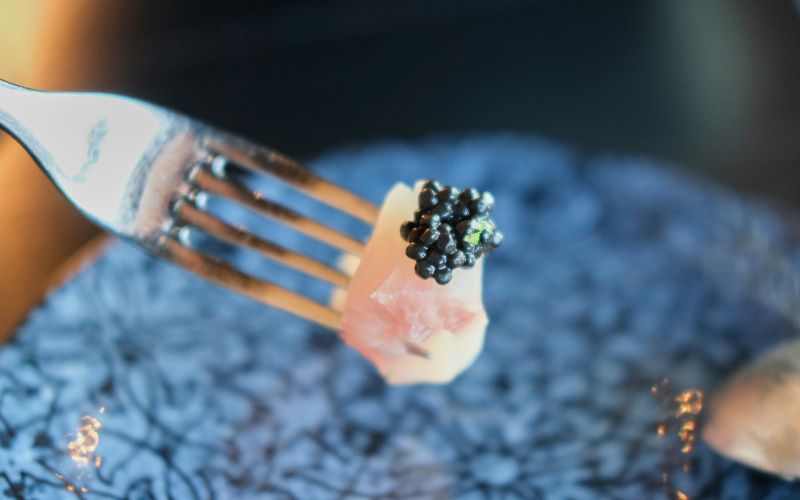
4. How to Properly Taste Caviar for the First Time?
First-time tasting is best kept simple so the roe remains the main focus rather than being hidden under strong accompaniments.
When exploring what does caviar taste like, serving it cold and using neutral utensils makes it easier to notice its briny, buttery, mineral, and nutty nuances.
Step 1: Keep the Caviar Cold
Keep the tin chilled until you are ready to taste it, ideally resting it over crushed ice while serving. Caviar is traditionally enjoyed cold because low temperatures help protect its texture, freshness, and delicate flavor during the tasting experience.
Step 2: Choose a Non-Metallic Spoon
Use a mother-of-pearl, glass, ceramic, or horn spoon rather than a reactive metal utensil. Neutral serving tools help preserve the caviar’s clean taste without introducing metallic flavors that could interfere with its naturally delicate profile.
Step 3: Start With a Small Portion
Take a small spoonful rather than a large bite, especially if you are tasting caviar for the first time. A modest portion makes it easier to focus on the roe’s texture, salinity, buttery richness, and subtle finish without overwhelming your palate.
Step 4: Let the Pearls Rest on Your Tongue
Place the caviar gently on your tongue and avoid chewing aggressively. Allow the pearls to warm slightly in your mouth, then press them gently so they release their flavor and characteristic soft pop gradually.
Step 5: Notice the Flavor in Stages
Pay attention to how the taste changes rather than judging only the first salty impression. Good caviar can move from clean brininess into buttery, mineral, nutty, or mildly sweet notes before leaving a smooth, lingering finish.
Step 6: Add Simple Accompaniments Later
Taste the caviar plain first before trying it with blinis, toast, crème fraîche, potato, or other mild accompaniments. Keeping additions subtle prevents them from overpowering the roe and makes flavor comparisons easier.
5. FAQs about Caviar Tastes
Caviar can be surprising on a first tasting because its flavor and texture are quite different from ordinary seafood.
Does caviar really taste good?
Whether caviar tastes good depends on personal preference, but high-quality caviar is valued for its balance of gentle brininess, buttery richness, and subtle mineral or nutty notes.
Is caviar actually fish eggs?
Yes. Caviar is made from fish roe, traditionally from sturgeon. Under FDA labeling guidance, the unqualified term “caviar” should be used for salted sturgeon roe, while products made from other fish eggs should identify the species, such as “salmon caviar” or “whitefish caviar.”
Is caviar supposed to pop in your mouth?
Yes, good caviar should usually have a gentle pop when the pearls are pressed against the tongue. High-quality roe tends to feel firm and glossy rather than mushy, then releases its briny, buttery flavor as the delicate membrane breaks.
6. Final Thoughts
Caviar can combine delicate brininess with buttery richness and subtle nutty or mineral notes, but the exact experience varies between varieties. So, what does caviar taste like? It depends on freshness, pearl size, texture, and serving temperature.
Sampling different types can help you notice how each one changes from the first bite to the lingering finish. TeaKoe also shares approachable tasting tips and food insights for anyone curious about unfamiliar flavors.