



Salmon can lose its silky texture and rich flavor when reheated too quickly or exposed to excessive heat. Knowing how to reheat salmon in oven allows the fish to warm gradually while retaining moisture in both the center and surface.
This guide covers oven temperature, preparation-specific adjustments, timing, and common concerns. Refer to TeaKoe’s detailed article below for more useful reheating guidance.
1. Why the Oven Is the Best Method for Reheating Salmon
The oven offers gentle, even heat that warms thick salmon portions more consistently than faster methods. Setting the temperature between 275°F and 300°F gives the center time to heat without overcooking the exterior.
Covering the fish loosely with foil also traps enough moisture to protect its delicate fats, reducing dryness while preserving a soft, flaky texture.
>>> Read More: How to Reheat Crawfish and Keep It Juicy and Flavorful
2. Detailed Guide: How to Reheat Salmon in Oven?
Slow heating is essential because salmon can turn dry and firm within only a few extra minutes.
- Preheat the oven: Set the temperature to 275°F. Low heat creates a gentler environment that warms the salmon gradually instead of cooking the outside too quickly.
- Remove the salmon from the refrigerator: Take out only the portion you plan to eat. Let it sit briefly while the oven preheats, but do not leave it at room temperature for an extended period.
- Choose a suitable baking dish: Place the salmon in a shallow oven-safe dish or on a lined baking sheet.
- Position the skin correctly: Arrange skin-on salmon with the skin facing down. This layer protects the flesh from direct contact with the hot baking surface.
- Add a little moisture: Brush the top with olive oil, melted butter, broth, or reserved cooking juices.
- Cover the fish loosely: Place foil over the dish without pressing it tightly against the salmon.
- Reheat at low temperature: Keep the temperature steady rather than increasing it to shorten the process.
- Check after 10 minutes: Thinner fillets may warm quickly, while thicker portions need additional time.
- Add more time gradually: Continue heating in two- or three-minute intervals when the middle remains cool.
- Remove the salmon promptly: Take the dish out once the fish is heated throughout. Leaving it in the oven longer than necessary can dry the surface and produce a firmer texture.
- Rest briefly before serving: Allow the salmon to sit for one or two minutes.
3. One Oven Method Doesn’t Fit Every Salmon Dish
Preparation style changes how salmon responds to reheating because skin, sauces, fillings, and wooden planks affect moisture and heat distribution.
Plain baked salmon
Plain baked salmon benefits from a light coating of oil, butter, or broth before reheating. Place it in a shallow dish, cover it loosely with foil, and use low heat.
Mild seasonings such as lemon, dill, parsley, or black pepper can refresh the flavor without overwhelming the fish.
Skin-on salmon
Position skin-on salmon with the skin facing downward so it acts as a barrier between the flesh and the baking surface. Leave the covering slightly loose to preserve moisture.
For firmer skin, remove the foil during the final few minutes, but watch the fillet carefully to prevent dryness.
Glazed salmon
Sweet or savory glazes can burn when exposed to high oven temperatures. Add a thin layer of reserved glaze only when the surface appears dry, rather than coating it heavily.
Stuffed salmon
Stuffed salmon requires more time because both the fish and filling must warm through. Cover the dish to protect the exterior, then check the thickest section carefully.
Dense fillings containing cheese, vegetables, breadcrumbs, or seafood may remain cool after the surrounding salmon already feels warm.
Cedar plank leftovers
Remove leftover salmon from the cedar plank before reheating unless the plank is still suitable for oven use. Transfer the fish to a covered baking dish and add a little moisture.
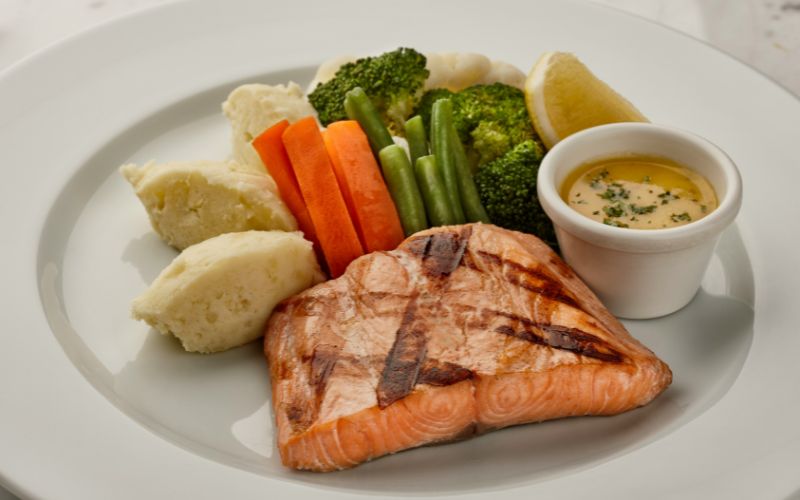
4. How Long to Reheat Salmon in Oven?
Reheat salmon in an oven set to 275°F for approximately 15 minutes. Thin fillets may be ready sooner, while thicker portions can require several additional minutes.
Begin checking early and remove the fish once the center is warm to avoid drying the edges.
5. Common Questions about Oven-Reheated Salmon
Sauces, foil, skin, and repeated heating can all influence the texture and quality of leftover salmon.
What’s the best sauce for reheated salmon?
Lemon butter, dill yogurt sauce, garlic butter, or a light herb dressing can restore moisture and brighten the salmon’s flavor. Serve the sauce after reheating or add only a small amount beforehand to avoid making the fish overly soft.
Should foil always be used?
No. Foil can help retain moisture, but it is not the only option. A covered baking dish can serve the same general purpose.
Can salmon stay moist after reheating in the oven?
Yes, salmon can remain moist when reheated at a low temperature with a light coating of oil, butter, broth, or cooking juices. Covering the dish and removing the fish promptly are equally important for protecting its delicate texture.
Is reheating salmon more than once safe?
Repeated reheating can reduce quality and increase the risk of improper handling between heating cycles. Warm only the portion you plan to eat, keep the rest refrigerated, and avoid repeatedly cooling and reheating the same fillet.
Can skin-on salmon be reheated successfully?
Yes, skin-on salmon reheats well when placed skin-side down in a baking dish. The skin protects the flesh from direct heat, while a low oven temperature helps the center warm without making the fish excessively dry.
6. Final Thoughts
Low oven heat, light moisture, and careful timing can make leftover salmon taste tender and flavorful again. Applying how to reheat salmon in oven correctly also requires small adjustments for plain, glazed, stuffed, skin-on, or cedar-plank portions.
Foil protects the fish from moisture loss, while early checks prevent the edges from becoming dry. TeaKoe provides practical kitchen guidance for reheating delicate seafood with greater confidence and consistency.