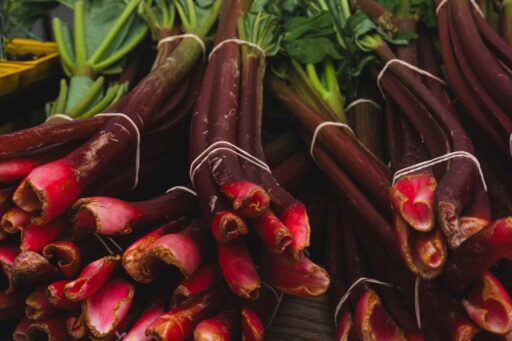
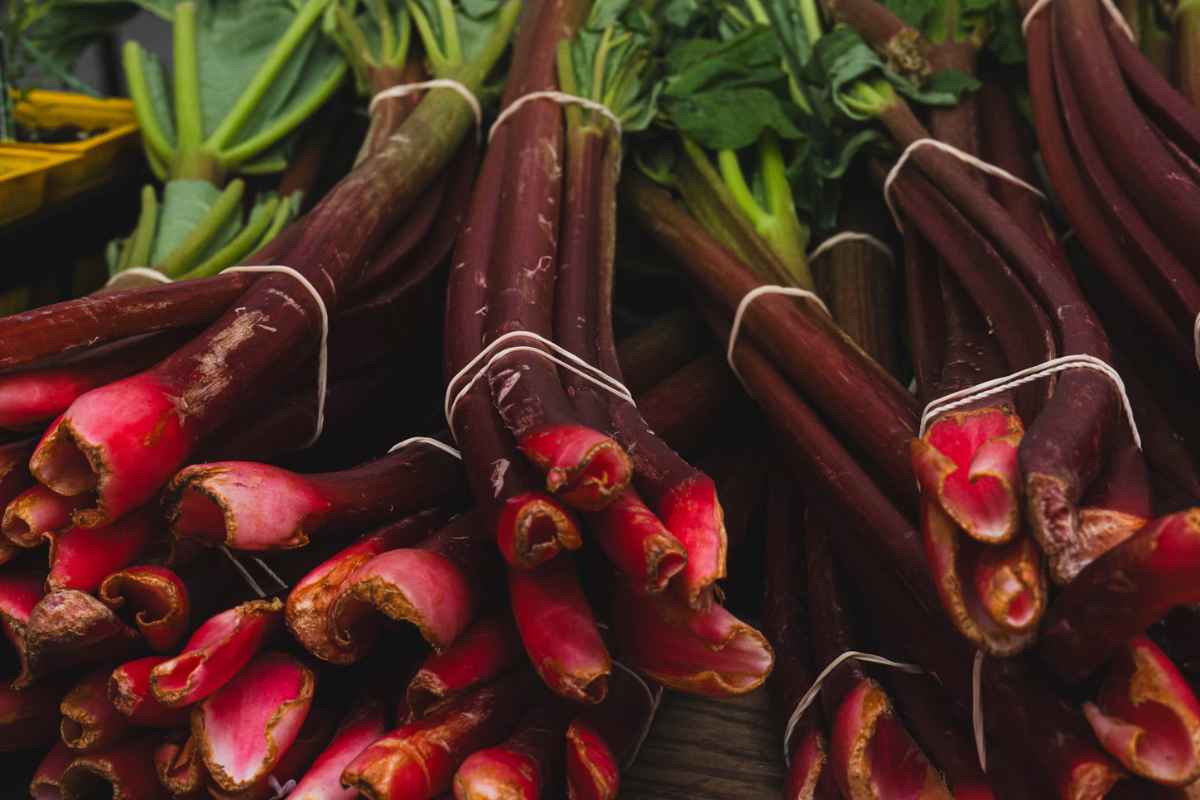

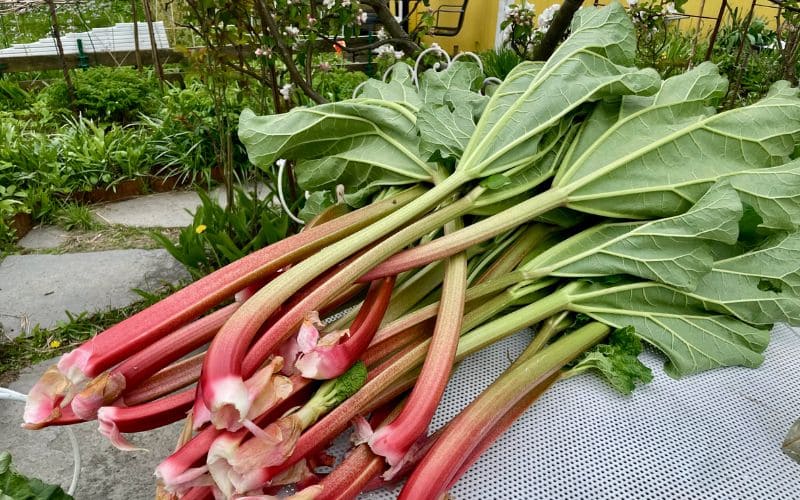
Bright red stalks and a celery-like appearance might make rhubarb seem like an ordinary vegetable, but its flavor tells a completely different story. Famous for its mouth-puckering tartness, rhubarb becomes surprisingly delicious when paired with the right ingredients.
So, what does rhubarb taste like, and how does cooking transform it? Explore TeaKoe’s guide below to discover its distinctive flavor, surprising comparisons, and practical tips before your first bite.
1. What Does Rhubarb Taste Like?
What does rhubarb taste like? Rhubarb has a distinctly sharp, tart flavor often compared to green apples, cranberries, and lemons, but with very little natural sweetness. Raw stalks are intensely sour and crisp, offering a juicy crunch similar to celery.
Once cooked, rhubarb softens into a tender, almost jam-like texture while retaining its signature tanginess. Adding sugar, strawberries, or other sweet ingredients balances its acidity, making it especially delicious in pies, jams, compotes, and desserts.
2. What Does Rhubarb Taste Like Compared to Other Fruits?
Rhubarb’s bold acidity can resemble several familiar fruits, although its natural sweetness and texture are noticeably different. Comparing these flavors can help you anticipate its tartness and choose ingredients that complement it in recipes.
| Fruit | Flavor Profile | How It Compares to Rhubarb |
|---|---|---|
| Rhubarb | Intensely tart, tangy, slightly vegetal, with minimal sweetness | The reference point, known for its sharp acidity and crisp raw texture |
| Green Apple | Tart, crisp, refreshing, with noticeable natural sweetness | Similar sharpness, but green apples are sweeter and fruitier |
| Cranberry | Very tart, slightly bitter, with subtle fruity notes | Closely matches rhubarb’s sour intensity, though cranberries have a more berry-like flavor |
| Lemon | Strongly acidic, bright, citrusy, and refreshing | Comparable mouth-puckering sourness, but rhubarb lacks lemon’s distinctive citrus aroma |
| Strawberry | Sweet, juicy, fragrant, with mild acidity | Much sweeter than rhubarb, making strawberries an excellent pairing to balance its tartness |
| Raspberry | Sweet-tart, aromatic, and slightly floral | Shares rhubarb’s tangy character but offers more sweetness and a stronger berry aroma |
| Sour Cherry | Tart, fruity, mildly sweet, with a rich finish | Similar acidity when cooked, although sour cherries have a deeper, fruitier taste |
Note: Although rhubarb is commonly used like a fruit in desserts, it is botanically a vegetable. Only the stalks are used as food; rhubarb leaves contain toxic compounds and should never be eaten.
>>> Read More: What Does Caviar Taste Like? What to Expect From Your First Bite
3. Is Rhubarb Good for You? Nutritional Benefits and Considerations
Rhubarb isn’t just a tangy ingredient for pies and desserts; its colorful stalks also provide valuable nutrients and plant compounds. However, certain natural substances and preparation methods deserve attention if you want to enjoy its benefits safely.
Provides Vitamin K for Bone Health
Rhubarb is a notable source of vitamin K, an essential nutrient involved in normal blood clotting and bone metabolism. Adequate vitamin K intake helps support proteins responsible for maintaining healthy bones.
Although rhubarb can contribute to your daily vitamin K needs, it shouldn’t replace other nutrient-rich foods. People taking warfarin should maintain consistent vitamin K intake and consult their healthcare provider about dietary changes.
Supplies Antioxidants That Protect Cells
Beyond exploring what does rhubarb taste like, its nutritional profile reveals a variety of beneficial plant compounds, including anthocyanins in some red varieties and other polyphenols.
While laboratory studies suggest potential benefits from rhubarb’s plant compounds, evidence of specific health improvements in humans remains limited.
Enjoying rhubarb alongside other colorful vegetables and fruits can contribute to a varied, antioxidant-rich diet.
Supports Digestive Health With Fiber
Rhubarb provides dietary fiber, which helps support regular bowel movements and normal digestive function. Fiber also contributes to fullness, making rhubarb a useful addition to balanced meals.
However, its fiber content is moderate, so it shouldn’t be considered a primary fiber source. Pairing rhubarb with oats, yogurt, or other fiber-rich ingredients can create a more satisfying and nutritious dish.
Offers a Low-Calorie Ingredient for Balanced Meals
Fresh rhubarb is naturally low in calories and contains relatively little sugar, making it an appealing ingredient for people seeking lighter food options. Its intense tartness, however, often leads to recipes containing substantial amounts of added sugar.
Preparing rhubarb with naturally sweet fruits or using modest amounts of sweetener can help preserve its distinctive flavor without unnecessarily increasing the dish’s calorie content.
Contains Oxalates That Require Consideration
Rhubarb stalks contain oxalates, naturally occurring compounds that can contribute to calcium oxalate kidney stone formation in susceptible individuals. People with a history of these stones may need to moderate high-oxalate foods according to medical advice.
Cooking rhubarb in water and discarding the liquid can reduce some soluble oxalates, although it doesn’t eliminate them completely. Rhubarb leaves are toxic and must never be eaten.
4. How to Choose Rhubarb Based on Flavor and Texture?
The right rhubarb stalks can make a noticeable difference in your recipe, from their crispness to how well they soften during cooking.
If you’re curious about what does rhubarb taste like at its freshest, these simple selection tips will help you find stalks with appealing texture and bright, tangy flavor.
Step 1: Look for Firm, Crisp Stalks
Choose rhubarb stalks that feel firm and sturdy, with smooth surfaces and a fresh appearance. Crisp stalks generally indicate good freshness and moisture retention.
Avoid pieces that feel limp, rubbery, or excessively soft, as these may have lost quality. Fresh rhubarb should break cleanly rather than bend easily.
Step 2: Don’t Judge Sweetness by Color Alone
Rhubarb ranges from pale green to bright pink and deep red, but color doesn’t reliably indicate sweetness. Different varieties naturally produce different stalk colors, regardless of their tartness.
Red stalks may create more attractive desserts, while green varieties can taste equally delicious. Focus on freshness rather than assuming darker stalks are sweeter.
Step 3: Choose Stalk Thickness Based on Your Recipe
Thin and thick rhubarb stalks can both taste delicious when fresh. Slender stalks are often convenient for quick cooking, while thicker ones provide substantial pieces for pies, compotes, and sauces.
Larger stalks aren’t necessarily tougher or more sour. Choose consistent sizes when possible to help the pieces cook evenly.
Step 4: Check for Signs of Damage or Spoilage
Inspect rhubarb carefully for bruises, darkened soft spots, mold, or damaged areas before purchasing. Fresh stalks should have a clean appearance without sliminess or unpleasant odors.
Minor surface imperfections may be harmless, but severely damaged or decaying pieces are best avoided. Good-quality rhubarb generally delivers better texture and cooking results.
Step 5: Store Rhubarb Properly to Preserve Freshness
Remove any attached leaves immediately and discard them safely, as rhubarb leaves are toxic. Keep the stalks refrigerated in a loosely wrapped bag or suitable container to limit moisture loss.
Use them while they remain firm and fresh, or freeze chopped stalks for longer storage. Proper handling helps maintain their texture and distinctive tart flavor.
5. FAQs about Rhubarb Taste
Rhubarb’s unusually sharp flavor often surprises people who expect it to taste like a sweet red fruit. These common questions explain what influences its tartness, how to balance it, and why certain stalks may taste different.
Does red rhubarb taste sweeter than green rhubarb?
Not necessarily, because rhubarb’s color depends primarily on its variety rather than its sugar content. Some red varieties taste milder, but green stalks can be just as flavorful, so color alone isn’t a reliable indicator of sweetness.
Why is rhubarb so tart?
Rhubarb’s intense tartness comes mainly from naturally occurring organic acids, particularly malic acid and oxalic acid. Its relatively low natural sugar content makes that acidity especially noticeable, creating the sharp, mouth-puckering sensation associated with fresh rhubarb.
Can you eat rhubarb without sugar?
Yes, rhubarb stalks can be eaten raw or cooked without added sugar, although their intense sourness may be unpleasant for some people. Pairing rhubarb with naturally sweet fruits, such as strawberries or apples, can balance its tartness without relying entirely on added sweeteners.
Can rhubarb taste bitter?
Yes, rhubarb can sometimes have slightly bitter or astringent undertones alongside its dominant sour flavor, depending on the variety and growing conditions. However, strong bitterness accompanied by an unusual smell, sliminess, or other signs of spoilage is a reason to discard the stalks.
>>> Read More: How to Reheat Grilled Chicken? Proven Ways to Keep the Smoky Flavor Alive
6. Final Thoughts
Rhubarb may resemble celery, but its strikingly sour flavor tells a completely different story. The answer to what does rhubarb taste like lies in its vibrant acidity, subtle fruity notes, and remarkable ability to complement sweeter ingredients.
From homemade jams to comforting pies and tangy sauces, this versatile stalk can bring unexpected excitement to familiar recipes. Just remember that only the stalks are edible, as the leaves contain toxic compounds. Discover more fascinating flavors, ingredient tips, and recipe inspiration with TeaKoe.