
Reheated fish can become dry, rubbery, overly soft, or noticeably stronger in aroma when the wrong temperature or technique is used. Understanding how to reheat fish according to its texture helps protect delicate flakes, crisp coatings, rich oils, and flavorful sauces.
This guide explains why the smell changes, provides practical reheating steps, and shares creative ways to reuse leftovers. Refer to TeaKoe’s guide below for additional kitchen advice.
1. Why Does Reheated Fish Smell Stronger?
Cooked fish often releases a more noticeable aroma the second time it is heated, even when it has been stored safely.
Natural Compounds Break Down
Fish contains naturally occurring compounds that continue changing after cooking and storage. Reheating can release more volatile aroma molecules into the air, making the smell seem stronger than it did when the fish was freshly prepared.
Fish Oils Become More Noticeable
Fish lipids can undergo oxidation during storage and reheating, producing volatile compounds that contribute to fishy, fatty, rancid, or warmed-over aromas.
Research has linked the oxidative breakdown of unsaturated fatty acids with several key odor compounds in reheated seafood.
High Heat Releases Aromas Quickly
Strong heat causes moisture and aromatic compounds to escape rapidly from the fish. Microwaving uncovered or using a very hot skillet may therefore create a more concentrated smell than slow reheating in a covered dish.
Storage Conditions Affect Freshness
Loose wrapping allows fish to absorb refrigerator odors while its own aroma spreads to nearby foods. Storing leftovers promptly in an airtight container helps limit air exposure, moisture loss, and unnecessary odor development before reheating.
Overheating Intensifies the Smell
Fish that remains under heat after it is already warm can become dry while releasing increasingly strong aromas. Removing it promptly once heated helps preserve its texture and prevents the kitchen from filling with an overpowering fish smell.
2. How to Reheat Fish
Low, controlled heat is generally more effective than an aggressive temperature because delicate fish can lose moisture quickly.
- Remove the fish from the refrigerator: Take out only the amount you intend to serve. Keeping the remaining portion chilled prevents unnecessary temperature changes and repeated reheating.
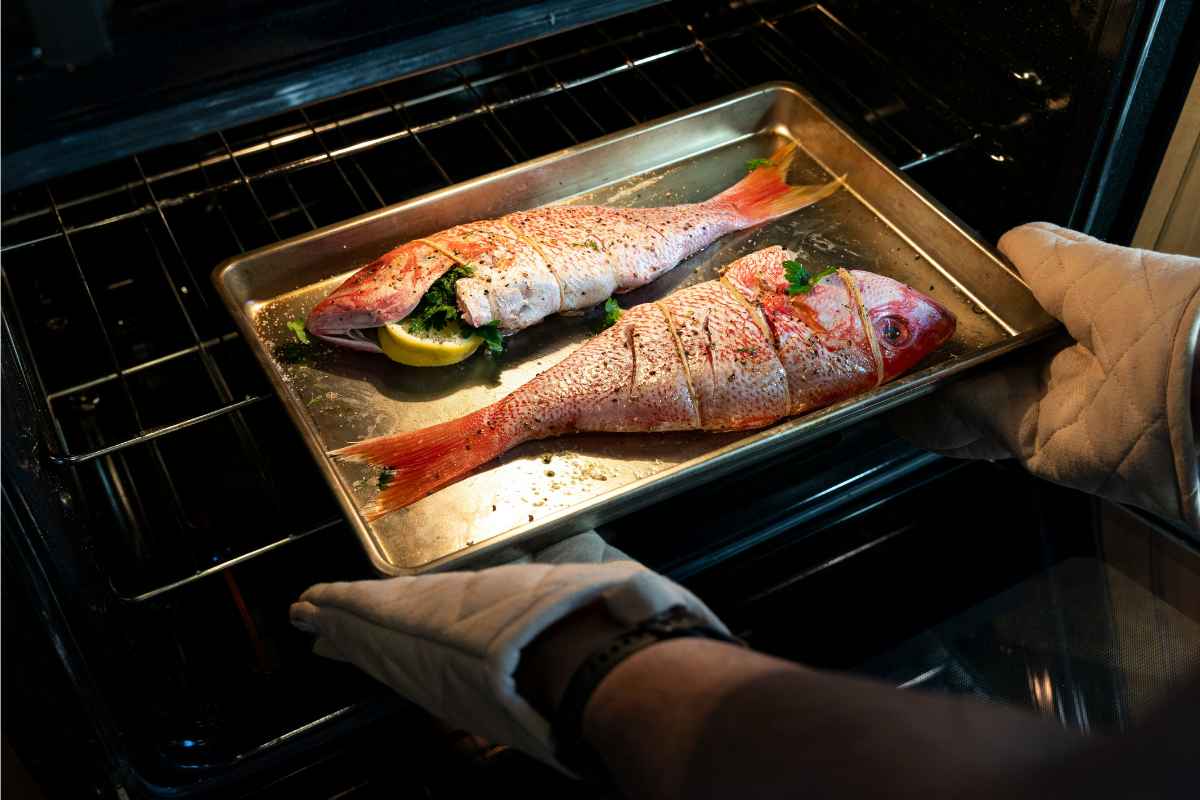
- Preheat the oven: Set the oven to approximately 275°F to 300°F. A moderate temperature warms the fish gradually without aggressively cooking its surface for a second time.
- Choose a suitable dish: Place the fish in a shallow oven-safe dish or on a lined baking sheet. Keep individual portions separated so heat can circulate evenly.
- Add a little moisture: Spoon a small amount of broth, water, sauce, melted butter, or cooking juices around the fish. Avoid adding too much, since excessive liquid may soften the texture.
- Cover the fish loosely: Use foil or an oven-safe lid to hold in moisture. Leave breaded or fried fish uncovered when preserving crispness is more important than trapping steam.
- Reheat gradually: Place the fish in the oven and warm it for approximately 10 to 15 minutes. Thick fillets or larger portions may require additional time.
- Check the center: Insert a food thermometer into the thickest section without breaking the fillet apart. Reheated leftovers should reach 165°F (74°C) throughout before serving.
- Remove the fish promptly: Take it out as soon as it is thoroughly heated. Continuing to cook it after this point can make lean fish dry and oily varieties overly soft.
- Rest briefly: Allow the fish to sit for one or two minutes before serving. This short pause helps the heat settle without allowing the portion to cool excessively.
3. Reheating Tips for Each Kind of Fish You Have
Texture and fat content determine how well different fish varieties tolerate reheating. Adjusting moisture, temperature, and covering methods helps each type retain the qualities that made it enjoyable when first cooked.
- Lean white fish: Cod, haddock, tilapia, and similar fish have little fat, so they can become dry quickly. Add a spoonful of broth or butter, cover the dish, and use low oven heat.
- Oily fish: Salmon, mackerel, and trout retain moisture better because of their natural fat content. Reheat them gently and avoid adding excessive oil or butter, which may make the final texture heavy.
- Breaded fish: Crisp coatings require dry heat rather than steam. Arrange the pieces in one layer on a baking sheet or wire rack and leave them uncovered.
- Fish in sauce: Sauced fish benefits from being reheated in a covered skillet or baking dish. Spread the sauce around and over the portion to protect the surface from drying.
4. Turn Leftover Fish Into an Entirely New Meal
Leftover fish does not always need to be served in its original form. Combining it with fresh vegetables, grains, sauces, bread, or pasta can improve texture while creating a meal that feels completely different from the previous serving.
Fish Tacos
Flake the fish into bite-sized pieces and warm it briefly before adding it to soft tortillas. Cabbage, salsa, avocado, lime, or a creamy dressing can restore freshness and balance any dryness without overpowering the original seasoning.
Grain Bowls
Serve warm fish over rice, quinoa, or another cooked grain with vegetables and a light dressing. This option works particularly well for salmon, tuna, or seasoned white fish because the grains absorb extra sauce and cooking juices.
Pasta
Break the fish into large flakes and fold it gently into warm pasta shortly before serving. Creamy sauces suit mild white fish, while tomato, lemon, garlic, or herb-based sauces can complement wider varieties without requiring prolonged reheating.
Fish Cakes
Combine flaked fish with mashed potatoes, breadcrumbs, herbs, and a binding ingredient before shaping the mixture into patties. Pan-cook the cakes until the outside becomes golden and the center is thoroughly heated, giving soft leftovers a firmer texture.
Sandwiches
Cold or gently warmed fish can become a filling for sandwiches, rolls, or wraps. Warm it only briefly so it remains tender, then add crunchy vegetables, herbs, or sauce for contrast.
>>> Read More: How to Reheat a Seafood Boil Without Overcooking the Seafood
5. Common Questions about Reheating Fish
Serving style, frozen storage, and signs of doneness often create uncertainty when handling cooked fish.
What’s the best way to serve leftover fish?
Serve reheated fish with a fresh sauce, crisp vegetables, grains, potatoes, or a light salad to balance its softer texture. It can also be flaked into tacos, pasta, sandwiches, or fish cakes when the original fillet no longer looks attractive.
Can frozen cooked fish be reheated directly?
Frozen cooked fish can be reheated without thawing, but it usually needs a longer cooking time and may warm unevenly. Cover it during the first stage to retain moisture, then check several areas with a thermometer to confirm that the entire portion reaches 165°F (74°C).
How do you know when fish is fully reheated?
The fish should be hot throughout, with no cold section in the thickest part. Use a food thermometer rather than relying only on color or steam, and confirm that reheated leftovers have reached 165°F (74°C) before serving.
6. Final Thoughts
Gentle heat, suitable moisture, and careful timing can keep leftover fish from becoming dry, rubbery, or unpleasantly strong in aroma. Knowing how to reheat fish also means adapting the method to lean, oily, breaded, or sauced varieties rather than treating every portion the same way.
Fresh toppings and creative meal ideas can further improve both flavor and presentation. TeaKoe provides practical cooking guidance to help you transform stored dishes into satisfying meals.