
Cold wings often lose their appeal when reheating leaves the skin soft while the meat dries out. Learning how to reheat wings in the oven helps restore crispness while warming the interior more evenly and protecting the juicy texture.
Wing size, sauce level, oven temperature, and tray spacing can all affect the result. Refer to the TeaKoe guide below for more practical reheating methods and crispiness-saving tips.
1. The Secret to Crispy Reheated Wings
Crispy reheated wings depend on removing excess surface moisture while giving the skin enough exposure to dry oven heat.
- Preheat the oven fully: Starting with a properly heated oven helps the skin begin crisping immediately instead of slowly warming in a cooler environment.
- Arrange wings in a single layer: Leave space between each piece so hot air can circulate freely. Crowding traps steam, which can soften the skin rather than crisp it.
- Use a wire rack when possible: Placing wings on a rack over a baking sheet lets heat reach more of the surface while excess moisture and fat drip away.
- Flip halfway through: Turning the wings gives both sides more direct exposure to heat, helping the skin crisp more evenly while reducing soft spots underneath.
- Add sauce near the end: Heavily sauced wings can become soggy during reheating. Warm them first, then toss with extra sauce shortly before serving to preserve more of the crispy exterior.
2. How to Reheat Wings in the Oven Step by Step
Oven reheating works best when the wings have enough space for hot air to circulate around each piece.
Arrange the wings properly
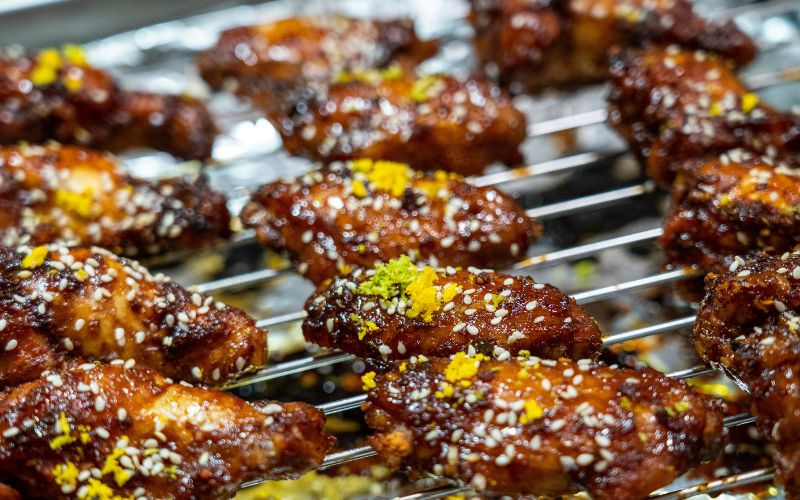
Place the wings in a single layer on a baking sheet, preferably over a wire rack so heat can reach more of the surface. Leave a little space between each piece to reduce trapped steam.
Heat until the skin crisps
Reheat the wings at a moderate oven temperature until the skin becomes crisp and the surface looks evenly heated.
Flip them halfway through so both sides receive direct heat. Avoid leaving them in longer than necessary, since extended reheating can dry the meat even if the skin looks perfect.
Check the thickest piece
Test one of the largest wings before removing the entire batch from the oven. The thickest section near the bone usually takes the longest to heat, so make sure it is thoroughly hot before serving.
Smaller pieces may finish sooner, especially when the batch contains wings of different sizes.
Rest before serving
Let the wings rest briefly after they leave the oven instead of eating them immediately. A short pause allows excess steam to escape, helping the skin stay crisp while the heat settles through the meat. Keep the rest brief so the wings remain hot and enjoyable at serving time.
>>> Read More: How to Reheat Chicken Wings in Air Fryer for Crispy, Juicy Results
3. Sauced Wings vs. Dry-Rub Wings: How Reheating Changes
Sauced wings and dry-rub wings react differently to oven heat because moisture, sugar, and surface seasoning affect how quickly the exterior crisps.
Adjusting the reheating approach for each style helps protect flavor while avoiding soggy skin, burnt sauce, or overly dry seasoning.
| Wing Type | Reheating Behavior | Best Approach | Main Risk |
|---|---|---|---|
| Sauced Wings | Sauce adds moisture, so the skin may take longer to crisp. | Reheat at moderate heat and add extra sauce near the end if needed. | Thick or sugary sauce can become sticky, dark, or overly wet. |
| Buffalo Wings | Thin sauce warms quickly but may soften the skin. | Reheat uncovered and toss with fresh Buffalo sauce after heating for a brighter finish. | Too much sauce during reheating can reduce crispness. |
| BBQ Wings | Sugar-heavy sauce can caramelize quickly under heat. | Use gentler heat and watch the surface closely, especially near the end. | Sauce may burn before the meat is fully warmed. |
| Dry-Rub Wings | Less surface moisture allows the exterior to crisp more easily. | Reheat uncovered with good spacing so hot air reaches each wing. | Excessive heat can dry the seasoning and meat. |
| Lightly Seasoned Wings | Usually, reheat evenly because there is little sauce to trap moisture. | Use steady oven heat and flip halfway through for balanced crispness. | Longer reheating can make lean sections dry. |
4. Some Questions about Reheating Wings in the Oven
Oven reheating can produce great results, but small differences in setup, moisture, and starting temperature often change the final texture.
Is a wire rack better than a baking sheet for reheating wings?
Yes, a wire rack usually gives better airflow around the wings and helps prevent the bottoms from sitting in rendered fat or trapped moisture.
A baking sheet still works, but flipping the wings halfway through becomes more important for even crisping.
Why does the skin stay crispy while the meat dries out?
The skin can crisp quickly as surface moisture evaporates, while the meat continues losing moisture the longer it stays in the oven.
Using moderate heat and removing the wings as soon as they are fully heated helps reduce dryness inside.
Can frozen cooked wings be reheated in the oven?
Yes, frozen cooked wings can be reheated in the oven without thawing first, although they will need more time than refrigerated wings.
Following the USDA safe food temperature chart, arrange them in a single layer, use steady heat, and check the thickest pieces carefully to ensure they reach an internal temperature of 165°F without overcooking the exterior.
5. Final Thoughts
Crispy reheated wings come down to steady oven heat, proper spacing, and careful timing so the skin revives without drying the meat.
Following how to reheat wings in the oven correctly helps restore crunch, preserve juiciness, and keep sauced or dry-rub wings satisfying from the first bite to the last. For more practical reheating guidance and everyday kitchen tips, turn to TeaKoe.