

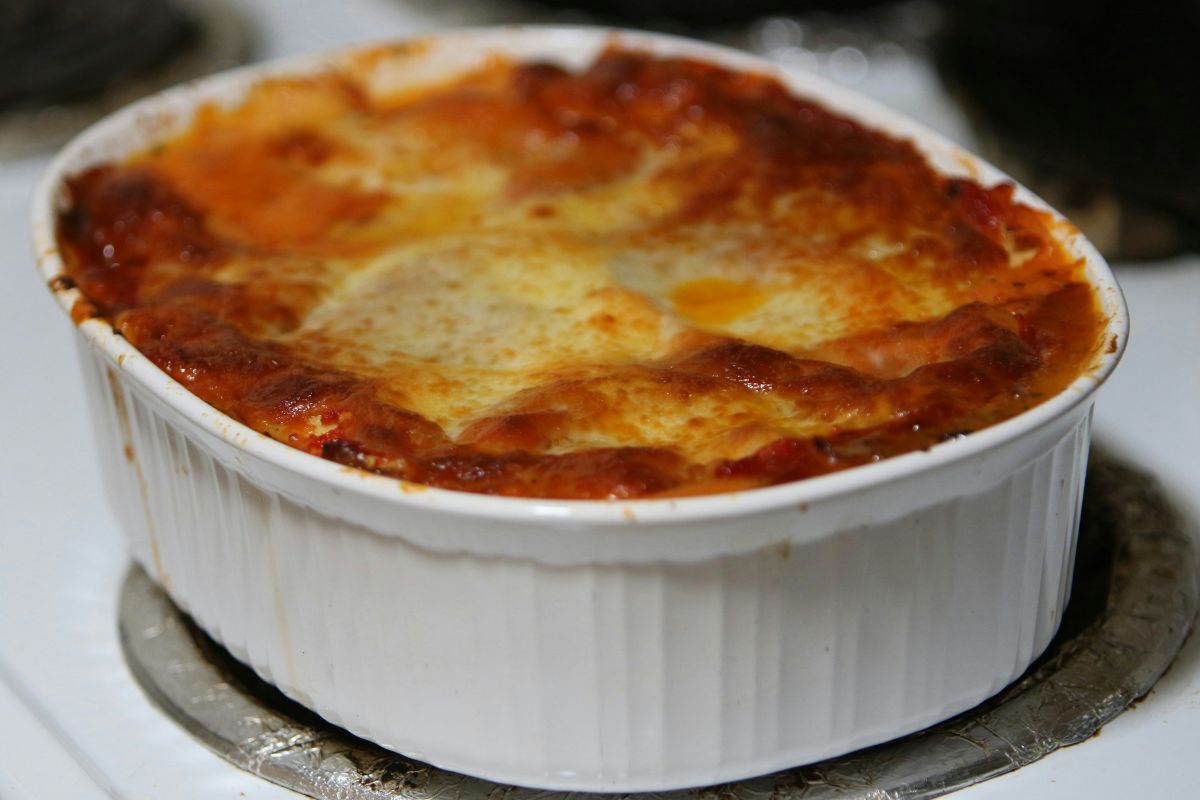

Chilled lasagna can become dry at the edges or cold in the center if reheated too quickly. This guide on how to reheat lasagna explains how to warm each layer evenly, keep the sauce rich, and protect the cheese from turning rubbery.
For more practical leftover tips, refer to TeaKoe’s guide below and bring every slice back to a moist, cheesy, oven-fresh texture. Let’s make it taste delicious again!
1. How to Reheat Lasagna So It Tastes Fresh Again
Lasagna reheats best when the layers warm slowly enough for the sauce, pasta, and cheese to soften together.
- Preheat the oven: Set the oven to about 350°F for steady, even reheating.
- Place lasagna in an oven-safe dish: Use a baking dish that fits the slice or portion without too much empty space.
- Add moisture if needed: Spoon a little marinara sauce or a few drops of water around the edges to prevent dryness.
- Cover with foil: Cover loosely so the lasagna heats through without drying out on top.
- Reheat until hot: Warm for about 20 to 30 minutes, depending on the size and thickness of the portion.
- Uncover near the end: Remove the foil during the last 5 minutes if you want the cheese to bubble slightly.
- Rest before serving: Let the lasagna sit for a few minutes so the layers settle and slice more cleanly.
2. The Fast Track: How to Microwave Leftover Lasagna Safely
Microwaving is the quickest way to reheat lasagna, but it still needs moisture and short timing to protect the layers.
- Place one slice on a microwave-safe plate: Reheat single portions instead of a large block so the center warms more evenly.
- Add a little sauce or water: Spoon a small amount around the edges to keep the pasta from drying out.
- Cover the slice: Use a microwave-safe lid or damp paper towel to trap light steam.
- Heat in short intervals: Microwave for 1 minute first, then continue in 30-second intervals until hot.
- Check the center: Insert a fork or knife into the middle to make sure there are no cold spots.
- Let it rest briefly: Wait 1 to 2 minutes so the heat spreads through the layers.
- Finish carefully: Avoid overheating because the cheese can become rubbery and the edges can dry out fast.
3. Why Does Lasagna Cheese Get Tough or Rubberish?
Lasagna cheese can lose its creamy pull when the heat is too strong, or the slice stays in the microwave too long.
- Too much heat: High heat can tighten the proteins in cheese, making it firm, chewy, or rubbery instead of soft and melty.
- Reheating too long: Lasagna is already cooked, so it only needs to be warmed through. Extra time can dry the cheese and make the top layer tough.
- Not enough moisture: Sauce helps protect the cheese from drying out. If the lasagna is dry, add a little sauce or water before reheating.
- Uneven heating: The edges may overcook before the center becomes hot. Short intervals and a brief resting time help the heat spread more evenly.
- Uncovered reheating: Leaving lasagna uncovered can remove moisture too quickly. Covering loosely with foil in the oven or a damp paper towel in the microwave helps keep the cheese softer.

4. Creative Recommendations from Teakoe to Use Leftover Lasagna
Leftover lasagna can become more than a reheated slice when you pair it with fresh textures, simple sides, or smart portioning.
Lasagna Sandwiches
Lasagna sandwiches turn leftovers into a hearty, crispy-edged meal.
Place a warmed slice between toasted bread, garlic bread, or a crusty roll, then add extra marinara or mozzarella if needed. The layers stay soft inside while the bread adds a fresh crunch.
Italian Meal Prep Bowls
Italian meal prep bowls are useful when you want lasagna flavor in a more balanced format.
Cut the lasagna into smaller pieces, then serve it with roasted vegetables, salad greens, or extra tomato sauce.
Family Dinner Leftovers
Family dinner leftovers work best when the lasagna is reheated as a shared dish instead of separate dry slices.
Place portions in a baking dish, add a little sauce around the edges, and cover while warming. Serve with garlic bread, salad, or soup to make the meal feel complete again.
Lunch Portions
Lunch portions make leftover lasagna easier to store, reheat, and carry. Slice the lasagna into single servings before refrigerating so each piece warms faster and more evenly.
Pack sauce separately if possible, then add it before reheating to keep the pasta moist and the cheese softer.
>>> Read More: How to Reheat Rice Without Drying It Out or Losing Flavor
5. Quick FAQs about Cooking Leftover Lasagna
Leftover lasagna reheats best when the layers have enough moisture and time to settle before serving.
Should lasagna rest after reheating?
Yes, lasagna should rest for a few minutes after reheating. This short pause lets the heat spread through the layers and helps the cheese, sauce, and pasta settle. It also makes the slice easier to cut and serve without falling apart.
Can leftover lasagna be frozen?
Yes, leftover lasagna can be frozen if it is wrapped well and stored in an airtight container. For the best quality and safety, cooked casserole leftovers should be refrigerated within 2 hours of cooking and can be kept in the fridge for 3 to 4 days before moving to the freezer.
Why does cheese become tough after reheating?
Cheese becomes tough when it is exposed to too much heat or reheated for too long. High heat can tighten the cheese proteins and remove moisture, leaving a chewy or rubbery texture.
6. Final Words
Good reheating keeps the center warm without making the edges dry or the cheese rubbery. You can also turn leftovers into sandwiches, meal prep bowls, family dinners, or easy lunch portions.
For more practical leftover tips, TeaKoe’s guide on how to reheat lasagna can help every slice taste soft, saucy, and delicious again.