
Creamy mac and cheese can turn dry, oily, or clumpy when reheated without enough moisture. This guide on how to reheat mac and cheese explains how to bring back a smooth cheese sauce, soften the pasta, and warm each serving without ruining the texture.
For more practical leftover tips, refer to TeaKoe’s guide below and make every bowl taste rich, creamy, and comforting again.
1. The Reasons Why Mac and Cheese Changes After Refrigeration
Mac and cheese often tastes different after chilling because the pasta and cheese sauce continue to change in storage.
- Pasta absorbs sauce: Cooked pasta keeps soaking up moisture after it sits in the refrigerator.
- Cheese sauce firms up: Cheese, milk, butter, and cream become thicker when cold. The sauce may look stiff or clumpy until it is gently reheated with added moisture.
- Fat can separate: Butter and cheese fats may separate from the sauce during cooling and reheating.
- Moisture evaporates or settles: Some moisture escapes during storage, while the rest may collect unevenly.
- Reheating can overwork the sauce: Strong heat can make cheese tighten, turn oily, or become grainy. Adding milk and warming slowly helps protect the smooth, creamy finish.
>>> Read More: How to Reheat Tamales Without Drying Out the Masa [Full Guide]
2. Method 1: Reheating Creamy/Stovetop Mac and Cheese on the Stove
The stovetop method is best for creamy mac and cheese because you can control the heat and adjust the sauce as it warms.
- Use a nonstick pan or saucepan: Add the mac and cheese to a pan that gives you enough room to stir gently.
- Add milk first: Pour in 1 to 2 tablespoons of milk per cup of mac and cheese to loosen the sauce.
- Start with low heat: Low heat helps the cheese sauce warm slowly without separating.
- Stir gently: Move the pasta often so the sauce melts evenly and coats each piece.
- Add more milk if needed: If the sauce still looks thick or dry, add another small splash instead of overheating it.
- Stop once creamy and hot: Remove from heat as soon as the sauce turns smooth and the pasta is warmed through.
- Serve right away: Mac and cheese tastes best when the sauce is still glossy, soft, and creamy.
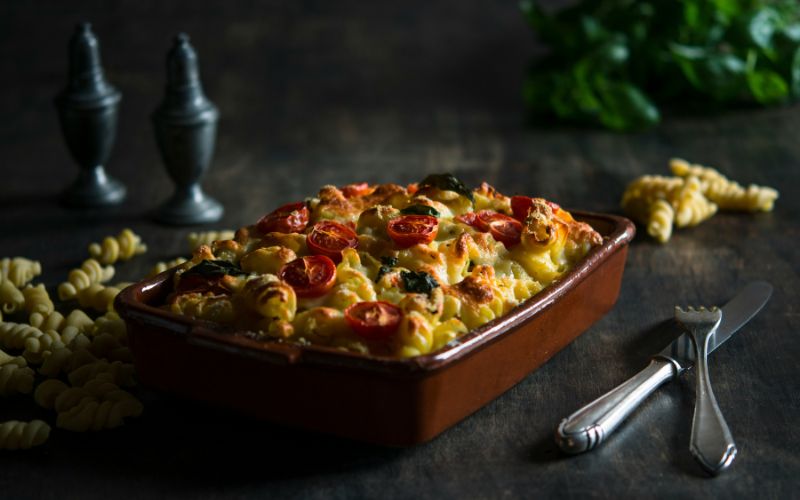
3. Method 2: Reheating Baked Mac and Cheese in the Oven
The oven method works best for baked mac and cheese because it warms the dish evenly while helping the top stay lightly golden.
A little added moisture and foil coverage can keep the inside creamy instead of dry or stiff.
- Preheat the oven: Set it to about 325°F to 350°F for steady reheating without drying the pasta too fast.
- Transfer to an oven-safe dish: Spread the mac and cheese evenly so the center and edges warm at the same pace.
- Add milk or cream: Drizzle 1 to 2 tablespoons over each serving to help loosen the sauce.
- Cover with foil: Covering helps trap moisture and protect the cheese from drying out.
- Reheat gently: Warm for about 15 to 25 minutes, depending on the portion size and thickness. To ensure optimal food safety, verify that the leftover mac and cheese is thoroughly reheated until the internal temperature reaches 165°F before serving.
- Uncover near the end: Remove the foil during the last few minutes if you want the topping to crisp slightly.
- Rest before serving: Let it sit briefly so the sauce settles and the texture becomes smoother.
4. Method 3: The Microwave Guide
The microwave is the fastest way to reheat mac and cheese, especially for small portions. The key is adding moisture, heating in short rounds, and stirring gently so the sauce turns creamy instead of oily or dry.
- Use a microwave-safe bowl: Place one serving of mac and cheese in a bowl with enough room for stirring.
- Add milk or cream: Mix in 1 to 2 tablespoons per cup to loosen the thickened cheese sauce.
- Cover loosely: Use a microwave-safe lid or damp paper towel to hold in light steam.
- Heat in short intervals: Microwave for 30 seconds first, then stir before heating again.
- Stir gently between rounds: This helps the sauce warm evenly and coat the pasta smoothly.
- Add more moisture if needed: If the mac and cheese still looks dry, add a small splash of milk.
- Stop once creamy and hot: Avoid overheating because the cheese can separate, turn grainy, or become oily.
5. How to Reheat Mac and Cheese: Common Mistakes
Mac and cheese can lose its creamy texture when reheated with too much heat, too little moisture, or careless timing.
Overheating the Cheese
Overheating is one of the fastest ways to ruin mac and cheese. Strong heat can cause the cheese sauce to separate, turning it oily, grainy, or rubbery instead of smooth.
Use low to medium heat on the stove, moderate oven heat, or short microwave intervals so the sauce warms gently.
Skipping Additional Liquid
Mac and cheese usually needs extra moisture after refrigeration because the pasta absorbs sauce as it sits.
Adding milk, cream, or a small splash of water helps loosen the sauce and bring back creaminess. Without liquid, the pasta may taste dry and heavy.
Reheating Too Long
Mac and cheese is already cooked, so it only needs enough time to become hot again. Reheating too long can dry the pasta, thicken the sauce too much, and make the cheese separate.
Ignoring Texture Changes
Leftover mac and cheese may look thicker, firmer, or slightly clumpy after chilling, so it needs adjustment before serving.
Stirring too hard or adding too much liquid at once can make the texture worse. Add moisture slowly, warm gently, and watch how the sauce responds as it reheats.
6. Final Words
Good reheating means watching the texture instead of rushing the process. Avoid high heat, long timing, and dry reheating so the cheese sauce stays soft instead of oily or grainy.
For more practical leftover tips, TeaKoe’s guide on how to reheat mac and cheese can help every bowl taste rich, warm, and creamy again.