


Leftover burritos often reheat unevenly, leaving the tortilla dry while the filling stays cold in the middle. Knowing how to reheat burrito properly helps restore warmth throughout while keeping the wrap soft, the fillings moist, and the texture satisfying.
Heating method, burrito size, ingredients, and starting temperature all influence the result. Refer to the TeaKoe guide below for more practical reheating techniques and serving tips.
1. Why Are Burritos So Tricky to Reheat?
Burritos combine several ingredients with different moisture levels, densities, and heating needs inside one tortilla.
- Thick, dense filling: Rice, beans, meat, and cheese packed tightly inside can take much longer to heat than the outer tortilla, creating cold spots in the center.
- Tortillas dry out quickly: High heat or extended reheating can remove moisture from the tortilla, making it stiff, brittle, or chewy before the filling is fully warm.
- Ingredients heat at different speeds: Cheese may melt quickly while meat, beans, or rice remain cool.
- Moist fillings can soften the wrap: Salsa, beans, sour cream, and other wet ingredients release moisture as they warm, potentially turning the tortilla soggy.
- Fresh toppings dislike heat: Removing lettuce, guacamole, tomatoes, and sour cream before reheating often gives better results.
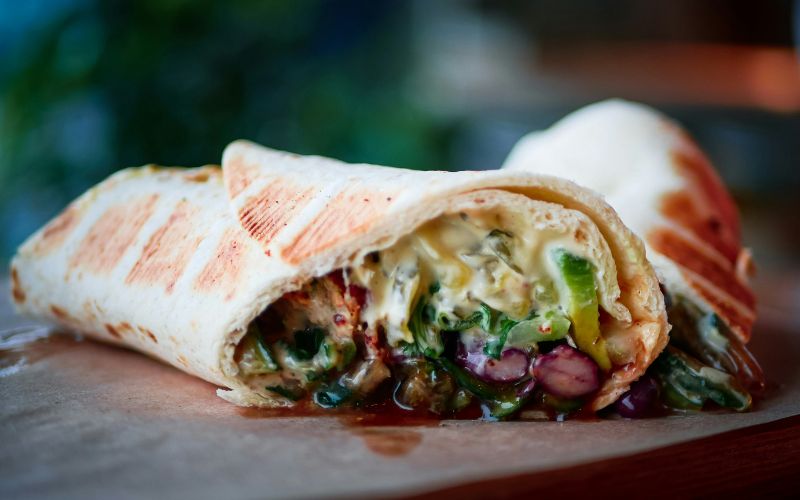
2. How to Reheat Burrito in Simple Steps
Different reheating methods produce different results depending on how much time you have and how crisp you want the tortilla.
Oven Method
The oven works well when you want even heating throughout the burrito while keeping the tortilla from turning rubbery. It takes longer than other methods, but the slower heat is useful for larger or densely filled burritos.
Preheat the oven to about 350°F, wrap the burrito loosely in foil, and heat for roughly 15 to 20 minutes. Remove the foil during the final few minutes if you prefer a slightly crisp exterior, then check that the center is fully hot before serving.
Microwave + Skillet Combo
This method combines speed with better texture, making it useful when the center is cold but you still want a lightly crisp tortilla. Start by placing the burrito on a microwave-safe plate and heating it in short intervals until the filling is mostly warm.
Then transfer it to a dry skillet over medium-low heat and cook each side briefly until the tortilla becomes lightly toasted.
Air Fryer Method
The air fryer is a strong option when you want a crisp exterior without using much added oil. Preheat it to around 325°F to 350°F, place the burrito in the basket, and heat for several minutes, turning once halfway through.
Larger burritos may need additional time, so check the center before removing them. Avoid using excessive heat because the tortilla can become hard before dense fillings such as rice, beans, or meat are warmed all the way through.
Microwave-Only Method
Microwaving is the fastest approach, but moisture control is important because the tortilla can become tough or chewy. Place the burrito on a microwave-safe plate, cover it loosely with a damp paper towel, and heat it in short intervals rather than one long cycle.
Turn the burrito between intervals so the center warms more evenly. Let it rest briefly after reheating, since the trapped heat continues moving through the filling and can help reduce cold spots before you take the first bite.
3. How Long Can Leftover Burritos Stay in the Refrigerator?
Leftover burritos are generally best kept in the refrigerator for 3 to 4 days when stored promptly and properly. Wrap them tightly or place them in an airtight container to reduce moisture loss, sogginess, and bacterial growth.
For better safety and texture, avoid storing burritos beyond about 5 days, and discard burritos that show unusual odors, appearance, or texture.
4. Small Changes That Make Leftover Burritos Taste Restaurant-Fresh
Simple finishing touches can make a reheated burrito feel noticeably fresher without changing the entire meal.
- Fresh salsa afterward: Add salsa only after reheating so the tortilla does not absorb extra moisture during heating.
- Add fresh avocado: Sliced avocado or guacamole is best added at the end rather than heated inside the burrito.
- Warm extra cheese separately: Melt a small amount of cheese on its own, then add it just before serving.
- Refresh the tortilla: After warming the center, briefly toast the burrito in a dry skillet to improve the outer texture.
>>> Read More: How to Reheat Nachos Without Turning Them Into a Soggy Mess
5. Frequently Asked Questions About Reheating Burritos
Burrito ingredients respond differently to heat, so a few small adjustments can greatly improve both texture and temperature.
Should lettuce and sour cream be removed before reheating?
Yes, remove lettuce and sour cream whenever possible before reheating. Lettuce can wilt and become watery, while sour cream may separate or change texture under heat, so both are better added back once the burrito is warm.
Can frozen burritos be reheated without thawing?
Yes, frozen burritos can be reheated without thawing, but they generally require lower, steadier heat and considerably more time than refrigerated burritos. Make sure the center reaches a safe temperature based on the official USDA safe food temperature chart before serving, especially when the filling contains meat.
Should you unwrap the foil before reheating?
It depends on the appliance. Foil can remain around the burrito in a conventional oven, but it must be removed before microwave reheating because metal should never go inside a microwave.
Can breakfast burritos be reheated the same way?
Yes, most breakfast burritos can use the same oven, microwave, skillet, or air fryer methods. Eggs, potatoes, cheese, and meat can heat at different speeds; however, heat the center thoroughly while avoiding excessive cooking that could make the eggs rubbery or the tortilla dry.
6. Final Thoughts
Leftover burritos taste much better when the filling is warmed evenly without sacrificing the tortilla’s texture. TeaKoe offers practical kitchen guidance for turning refrigerated meals into more enjoyable second servings.
Mastering how to reheat burrito means choosing the right method, protecting moisture, removing delicate toppings when needed, and checking the center before serving for a warm, satisfying result.