

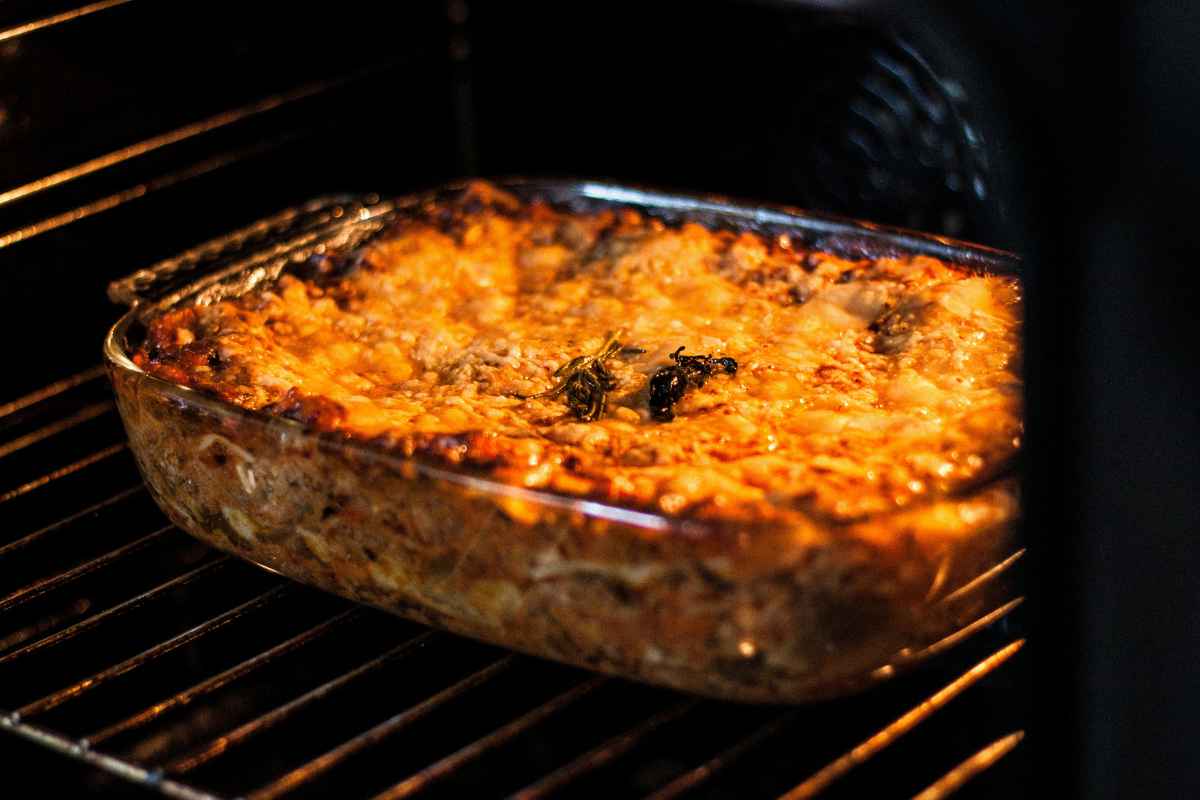

Well-reheated lasagna should feel comforting from the first bite, with tender pasta, warm sauce, and cheese that melts without drying out. The biggest difference comes from matching the reheating time to the portion size and protecting the dish from excess heat. This below guide explains how long to reheat lasagna in oven with practical timing suggestions, moisture-saving steps, and common mistakes to avoid.
1. How Long to Reheat Lasagna in Oven?
Portion size has a major impact on reheating time because a single slice warms much faster than a deep baking dish.
Keeping the oven around 350°F (175°C) and covering the lasagna during most of the process helps the center heat through without drying the exposed edges.
One Slice
One refrigerated slice generally needs about 15 to 20 minutes at 350°F (175°C). Place it in a small oven-safe dish, add a spoonful of sauce or water if it looks dry, and cover it with foil.
Two or Three Portions
Two or three portions usually require around 20 to 30 minutes because the larger volume takes longer to heat through. Arrange the pieces with a little space between them when possible and cover the dish tightly.
Half Pan
Half a pan of refrigerated lasagna typically takes approximately 30 to 40 minutes at 350°F (175°C).
Keep the pan covered for most of the reheating time to retain steam and moisture. Once the middle is thoroughly hot, uncover it briefly if you want the cheese on top to become slightly bubbly.
Full Baking Dish
A full refrigerated baking dish may need 40 to 50 minutes, depending on its depth and how densely the layers are packed.
Cover it securely with foil and place it on the center oven rack. Check the middle carefully before serving, since the edges often become hot well before the center.
>>> Read More: How to Reheat Lasagna So Every Layer Stays Moist and Flavorful
2. How to Reheat Leftover Lasagna to Prevent It From Drying Out
Lasagna can lose moisture surprisingly quickly when reheated uncovered, especially along the edges and top layer.
- Preheat the oven: Set the oven to 350°F (175°C) and allow it to heat fully before adding the lasagna.
- Transfer to an oven-safe dish: Place individual portions in a suitable baking dish if they are not already stored in one.
- Add moisture when needed: Spoon a small amount of tomato sauce, water, or broth around dry-looking edges.
- Cover tightly with foil: Seal the dish before reheating to trap steam inside.
- Reheat according to portion size: Allow approximately 15 to 20 minutes for one slice and progressively more time for larger quantities.
- Uncover near the end: Remove the foil during the final few minutes if you prefer a lightly browned or bubbling cheese layer.
- Let it rest: Leave the reheated lasagna for about five minutes before serving. Resting allows heat and moisture to redistribute through the layers while making the portions easier to handle.
3. Common Oven Reheating Mistakes
Reheating lasagna seems simple, yet a few small decisions can noticeably affect its texture.
Too High Heat
Turning the oven temperature up significantly may shorten the reheating time, but it also heats the edges and cheese faster than the center.
The result can be burnt corners surrounding a lukewarm middle. A moderate setting around 350°F (175°C) gives the heat more time to move gradually through each dense layer.
Removing Foil Too Early
Foil traps steam and protects the surface from prolonged direct heat, so taking it off too soon can cause the cheese and exposed pasta to dry before the center is ready.
Keep the dish covered during most of the reheating period, then uncover it only briefly at the end for additional browning.
Serving Immediately
Cutting or serving lasagna as soon as it leaves the oven can cause hot sauce and cheese to slide between loosely settled layers.
Giving the dish about five minutes to rest helps distribute residual heat more evenly. The layers also become easier to portion while remaining pleasantly warm and moist.
4. Lasagna Oven Timing FAQs
Storage conditions, portion size, and moisture content can all affect how leftover lasagna behaves in the oven.
Should lasagna be covered while reheating?
Yes, covering lasagna with foil during most of the reheating process helps trap moisture and prevents the exposed surface from drying out.
You can remove the foil during the final few minutes when you want the cheese to become bubbly or lightly browned.
Can lasagna be reheated twice?
Lasagna can be reheated if it has been cooled and stored safely, but repeated reheating can gradually reduce its moisture and overall texture. Per FDA Food Safety standards, cooked leftovers kept in airtight containers should be consumed within 3 to 4 days.
For better quality, reheat only the amount you expect to eat rather than warming the entire dish several times.
How do you know it’s fully heated?
The center should be thoroughly hot rather than merely warm around the edges.
Checking the thickest section is important, and using a food thermometer provides the most reliable confirmation that the internal temperature has reached 165°F (74°C).
Why does reheated lasagna become dry?
Moisture escapes when lasagna spends too long in the oven or is reheated without adequate covering.
High temperatures can worsen the problem, particularly around exposed edges, so using moderate heat, covering with foil, and adding a little sauce when necessary can help preserve softness.
5. Final Words
Golden cheese, tender pasta, and rich sauce can make leftover lasagna just as satisfying as the first serving when it is reheated with the right technique. Portion size, oven temperature, and moisture control all influence the final texture.
This TeaKoe guide explains how long to reheat lasagna in oven, with practical timing suggestions and simple methods to help each layer warm evenly without drying out.