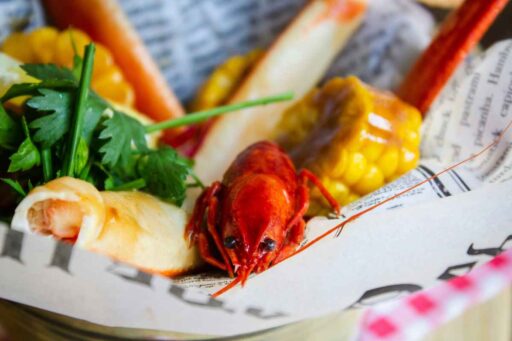

Seafood boil bags can be tricky to warm because shrimp, crab, sausage, corn, and potatoes all reheat at different speeds. Learning how to reheat seafood boil bag helps you protect delicate seafood while bringing the sauce and heartier ingredients back to serving temperature.
Bag material, portion size, added liquid, and reheating method all influence the final texture. Refer to the TeaKoe guide below for more practical reheating methods and seafood-saving tips.
1. Should You Reheat the Seafood Boil Bag or Open It First?
Keep the seafood boil bag sealed only when the packaging is specifically designed for reheating in hot water or steam. This approach helps trap moisture and warm the sauce evenly around shrimp, crab, sausage, corn, and potatoes without exposing them directly to intense heat.
For oven, microwave, or stovetop reheating, open the bag and transfer everything to a suitable dish or pan. Doing so gives you better control over temperature, sauce distribution, and reheating time while protecting delicate seafood from becoming rubbery or overcooked.
2. How to Reheat Seafood Boil Bag in Details
Seafood boils reheat best when the ingredients warm gradually instead of being exposed to aggressive heat all at once.
- Prepare the bag: Check that the bag is safe for your chosen reheating method. If using hot water or steam, keep it sealed only when the packaging allows it; otherwise, transfer the contents to a suitable pan, baking dish, or microwave-safe container.
- Heat gradually: Use moderate heat so the sauce warms first and gently transfers heat to the seafood, sausage, corn, and potatoes. Avoid rushing the process because shrimp and crab can become rubbery before denser ingredients are fully heated.
- Check every ingredient: Test more than one item before serving, especially thicker potatoes, sausage pieces, and shellfish. Follow standard leftover safety guidelines, stirring or repositioning the contents if needed.
- Toss the sauce before serving: Once everything is heated through, gently toss the ingredients in the seasoned butter or sauce.
3. Shrimp, Crab, and Crawfish Different Speeds
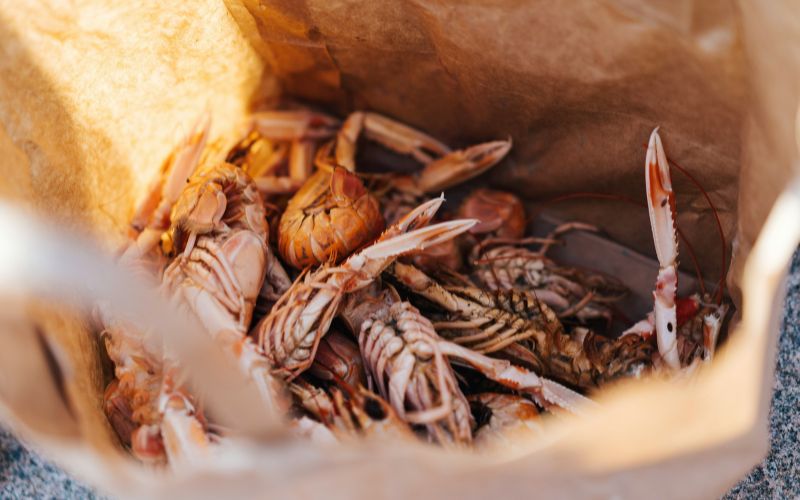
Delicate shellfish do not warm at the same rate, so treating every ingredient identically can quickly lead to rubbery shrimp or dry crab meat. Adjust the timing based on each seafood type and check the most delicate pieces early.
| Seafood | Reheating Speed | Key Consideration | Best Approach |
|---|---|---|---|
| Shrimp | Fast | Shrimp can become firm and rubbery quickly once overheated. | Warm gently and remove from heat as soon as the shrimp is hot throughout. |
| Crab Legs | Moderate | Shells offer some protection, but the meat inside can dry out with prolonged heating. | Use moist, gentle heat and give thicker leg sections slightly more time. |
| Crab Clusters | Moderate to Slow | Dense clusters may warm unevenly around joints and thicker shell sections. | Reposition or turn them during reheating so heat reaches each section more consistently. |
| Crawfish | Fast | Small size allows crawfish to heat quickly, making overcooking easy. | Keep reheating brief and toss it in warm sauce near the end. |
| Mixed Shellfish | Varies | Smaller seafood may be ready before larger crab pieces or dense ingredients. | Check frequently and remove delicate items earlier when reheating outside the bag. |
4. How to Restore Separated or Thickened Cajun Butter Sauce
Cajun butter sauce may separate, become oily, or thicken after refrigeration as the butter and other ingredients cool. Reheat it slowly over low heat, stirring or whisking frequently to help the mixture come back together.
If the sauce looks broken, add a small amount of warm water or heavy cream while whisking until the texture becomes smoother.
When the sauce is simply too thick, loosen it gradually with small splashes of chicken broth, seafood stock, or water.
Add the liquid little by little so the sauce does not become watery. Continue stirring until it turns glossy, smooth, and easy to coat over the seafood again.
>>> Read More: How to Reheat a Seafood Boil Without Overcooking the Seafood
5. Main Concerns about Reheating Seafood Boil Bags
Seafood boil leftovers need careful reheating because bag material, ingredient size, and cooking speed can vary considerably.
Is the seafood boil bag safe to heat?
Only reheat the seafood inside the bag if the packaging is specifically labeled or instructed as heat-safe for that method. Transfer the contents to a suitable dish whenever the bag’s heat tolerance is unclear.
Can shrimp overcook while the potatoes are still cold?
Yes, shrimp can become rubbery much faster than dense potatoes warmed through. Use gradual heat, stir or reposition the ingredients, and remove delicate seafood early when possible, while allowing thicker items to continue heating.
Can frozen seafood boil bags be reheated?
Yes, frozen seafood boil leftovers can be reheated, but thawing them in the refrigerator first usually promotes more even heating.
Reheating directly from frozen takes longer, so use gentle heat and monitor the seafood closely to prevent overcooking before the larger ingredients become hot.
6. Final Thoughts
Reheating a seafood boil successfully comes down to gentle heat, careful timing, and keeping the sauce smooth enough to coat every ingredient. TeaKoe shares practical kitchen guidance to help leftovers taste flavorful and satisfying again.
Following how to reheat seafood boil bag properly helps shrimp, crab, crawfish, sausage, corn, and potatoes warm evenly while preserving their texture, moisture, and signature Cajun flavor.