

Salmon can lose its silky texture and delicate flavor when reheated with too much heat or too little moisture. This guide on how to reheat salmon explains how to warm leftovers gently while keeping the fish flaky, juicy, and fresh-tasting instead of dry or fishy.
For more simple reheating tips, refer to TeaKoe’s guide below and make every leftover portion easier to enjoy.
1. What Is the Best Way to Heat Up Leftover Salmon?
Gentle oven reheating is the best option because salmon can dry out fast when exposed to strong heat. The goal is to warm the fish slowly, protect its natural oils, and keep the flakes tender instead of firm or rubbery.
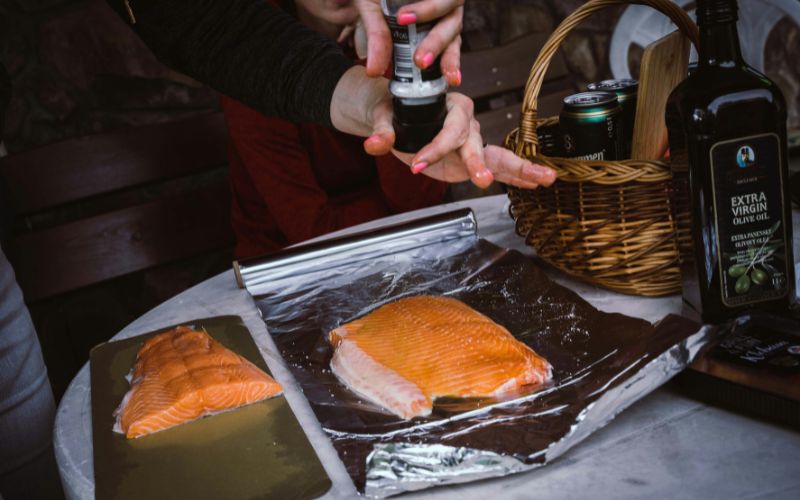
Preheat the oven to about 275°F (135°C), then place the salmon on a baking sheet or in a small baking dish. Add a splash of water, broth, or olive oil, cover loosely with foil, and heat for 10 to 15 minutes.
2. How to Reheat Salmon in the Oven
Oven reheating is one of the safest ways to warm salmon without making it dry, rubbery, or overly fishy. Low heat and light moisture help the fish stay flaky while preserving its delicate flavor.
- Preheat the oven gently: Set the oven to about 275°F (135°C).
- Place salmon in a baking dish: Put the leftover salmon on a baking sheet or in a small oven-safe dish. Keep the pieces in a single layer so they heat evenly.
- Add moisture: Drizzle a little olive oil, water, broth, or lemon juice over the salmon.
- Cover loosely with foil: Use aluminum foil to trap gentle steam around the fish.
- Reheat slowly: Warm the salmon for about 10 to 15 minutes, depending on thickness. Thicker fillets may need a few extra minutes, but avoid overheating.
- Check before serving: The salmon should feel warm and moist, not hot and firm. Let it rest briefly before eating so the texture stays tender and the flavor settles.
3. How to Reheat Salmon on the Stovetop
The stovetop works well when you want more control over heat and texture, especially for smaller salmon portions.
- Use low heat: Place a nonstick skillet over low to medium-low heat. Strong heat can make salmon firm, dry, and overly fishy before the center warms properly.
- Add light moisture or fat: Add a small splash of water, broth, or a little olive oil to the pan.
- Place salmon skin-side down if possible: If the salmon has skin, put that side against the pan first.
- Cover the pan: Add a lid to trap gentle steam around the salmon.
- Heat for a few minutes: Warm the salmon for about 3 to 5 minutes, depending on thickness.
- Check the texture: Remove the salmon once it is just warmed through and still tender.
>>> Read More: How to Reheat Steak Without Drying It Out or Overcooking It
4. Can You Reheat Salmon in the Microwave?
Yes, you can reheat salmon in the microwave, but it should be done gently.
Strong microwave heat can dry out the fish quickly and make the smell more noticeable, so lower power works better.
Place the salmon in a microwave-safe dish, add a small splash of water or broth, and cover it securely.
Heat at 30 to 50% power in 30-second intervals until just warmed through. Stop early if the salmon feels tender and moist.
5. What are Common Mistakes when Reheating Salmon?
Salmon is delicate, so small reheating mistakes can quickly change its texture, smell, and flavor.
Using Excessively High Temperatures
High heat is one of the easiest ways to ruin leftover salmon. It can tighten the proteins too quickly, pushing out moisture and leaving the fish firm, dry, or chalky.
Low oven heat or a gentle stovetop method works better because it warms the fish slowly without stripping away its natural oils.
Reheating Too Long
Salmon only needs to be warmed through, not cooked again. Leaving it in the oven, skillet, or microwave for too long can make the flakes tough and the flavor stronger than expected.
Skipping Moisture Protection
Reheating salmon without moisture can dry out the surface before the center is warm. A small splash of water, broth, lemon juice, or olive oil helps protect the fish from becoming stiff.
Reheating Multiple Times
Repeated reheating lowers both quality and food safety. Each round of warming and cooling makes salmon drier, stronger-smelling, and less pleasant to eat.
It is better to reheat only the portion you plan to serve, then keep the remaining salmon chilled until you are ready to use it.
6. Salmon Reheating Questions Answered
Leftover salmon can still taste fresh when you choose the right reheating method for its texture and thickness.
Is it better to reheat salmon in the oven or microwave?
The oven is usually better because it uses gentler, more even heat, which helps salmon stay moist and flaky. The microwave is faster, but it can dry out the fish or make the smell stronger if the power is too high.
For best results, use the oven when you have time and the microwave only for quick, careful reheating.
Can salmon be reheated without overcooking it?
Yes, salmon can be reheated without overcooking if you use low heat and stop once it is just warmed through. Adding a little moisture, such as water, broth, lemon juice, or olive oil, helps protect the fish from drying out.
Avoid high temperatures and long reheating times because cooked salmon becomes firm quickly.
Can frozen cooked salmon be reheated?
Yes, frozen cooked salmon can be reheated, but thawing it in the refrigerator first gives the best texture. Once thawed, reheat it gently in the oven or on the stovetop with light moisture and a cover.
Reheating directly from frozen is possible, but it takes longer and can make the outside dry before the center warms properly.
What’s the best way to eat leftover salmon?
Leftover salmon is best enjoyed cold in salads, sandwiches, or wraps.
If you prefer it warm, reheat it gently over low heat or in the microwave at 50% power to keep it moist and prevent it from drying out.
7. Final Words
Salmon reheats best when you treat it gently and avoid rushing the process with strong heat. Low oven temperature, light moisture, loose covering, and short heating times all help protect its flaky texture and clean flavor.
The stovetop can also work well for smaller portions, while the microwave should be used carefully at reduced power. Reheat only what you plan to eat so the fish does not become dry or overly strong-tasting.
For more simple kitchen tips, TeaKoe’s guide on how to reheat salmon can help you enjoy leftovers that still taste moist, tender, and satisfying.