

Yesterday’s stuffing can easily lose the contrast that makes it so satisfying, becoming dry in the center and soft around the edges.
Getting how to reheat stuffing right means bringing moisture back into the bread without sacrificing its lightly crisp surface. TeaKoe breaks down the techniques for bringing leftover stuffing back to a better texture.
1. Do You Need to Thaw Frozen Stuffing Before Reheating?
No, frozen stuffing does not have to be thawed before reheating. You can warm it straight from frozen, although it will need extra cooking time.
2. How to Reheat Stuffing?
Leftover stuffing usually needs two things before reheating: a little moisture and controlled heat.
For how to reheat stuffing, broth can soften dried bread while butter restores richness, and the best appliance depends on whether you want crisp edges, a large batch, or the fastest serving.
Oven Method (Best for Large Batches)
Oven reheating is ideal when several servings need to be warmed together. Covering the dish first allows the stuffing to heat gently without losing too much moisture, while uncovering near the end creates a golden, slightly crisp surface.
- Preheat the oven to 350°F.
- Transfer the stuffing to a baking dish and spread it into an even layer.
- Drizzle a few tablespoons of chicken or turkey broth over any noticeably dry areas.
- Add a small pat of butter for extra richness.
- Cover the dish with foil and bake for about 30 minutes.
- Remove the foil and continue for another 10-15 minutes until the top develops crisp edges.
- Check that the center reaches 165°F before serving.
Stovetop Method (Best for Crispy Edges)
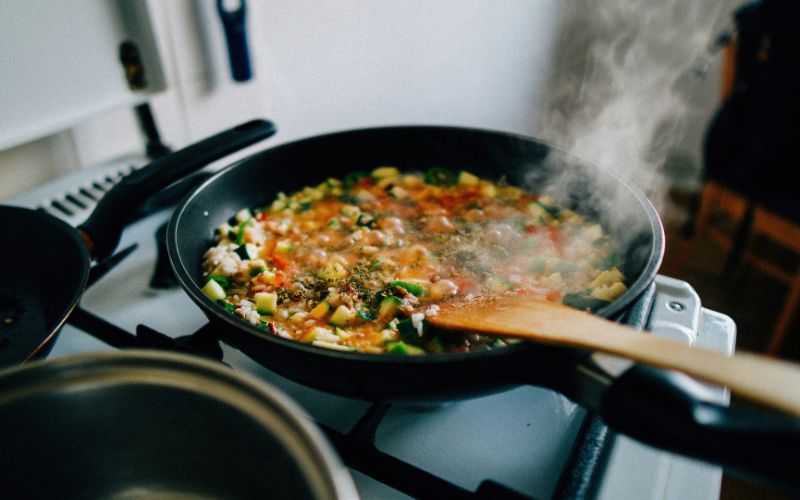
Skillet reheating works especially well when you want the bottom and edges to become deeply crisp while the inside stays moist.
- Warm about 1 tablespoon of oil in a large skillet over medium-high heat.
- Add the stuffing and spread it into a compact, even layer.
- Press gently with the back of a spoon so more bread touches the pan.
- Add a small splash of broth if the mixture looks particularly dry.
- Cook for roughly 3-5 minutes until the underside turns golden.
- Flip sections carefully and crisp the other side.
- Serve once the center is hot and the edges feel toasted.
Microwave Method (Fastest)
Microwaving is the quickest option for one or two servings, but moisture control makes the biggest difference. Short intervals and regular stirring help prevent cold spots, while a little broth or butter keeps the bread from becoming tough as it heats.
- Spoon the stuffing into a microwave-safe dish and break apart any dense clumps.
- Add a small splash of broth if the texture looks dry.
- Dot the top with a little butter if extra richness is needed.
- Cover loosely with parchment paper or another microwave-safe cover.
- Heat for about 2-3 minutes.
- Pause after each minute to stir and redistribute the heat.
- Continue until the center reaches 165°F, then serve immediately before the texture begins to firm again.
3. Oven vs. Microwave vs. Stovetop: Which Is Better?
Each reheating method changes the balance between moisture, crispness, speed, and portion size. Oven reheating works best for larger batches, the stovetop creates stronger browning, while the microwave is most convenient when time matters.
| Method | Best For | Texture | Speed | Main Advantage |
|---|---|---|---|---|
| Oven | Large batches | Moist center with crisp top | Slow | Reheats evenly and restores baked texture |
| Microwave | One or two servings | Soft and moist | Fastest | Requires minimal preparation |
| Stovetop | Small portions | Crispy edges with tender center | Fast | Creates more browning and toasted texture |
>>> Read more: How to Reheat Scrambled Eggs Without Making Them Rubbery
4. Broth or Butter: Which Is Better for Reheating Stuffing?
Dry stuffing usually needs moisture first, while flavor and browning benefit more from added fat. Broth restores hydration throughout the bread, whereas butter gives the surface extra richness and helps create crisp, golden edges.
| Option | Best For | Effect on Texture | Flavor | How to Use |
|---|---|---|---|---|
| Broth | Dry or dense stuffing | Restores moisture and softness | Savory and light | Drizzle gradually before reheating |
| Butter | Stuffing that needs richer flavor | Helps crisp edges and surface | Rich and buttery | Dot over the top or melt into a skillet |
| Broth + Butter | Very dry leftovers | Soft inside with better browning | Balanced and flavorful | Add broth first, then finish with butter |
5. How to Fix Stuffing That Is Too Dry After Reheating?
Dry stuffing does not necessarily need to be discarded. Once you understand how to reheat stuffing, small adjustments with broth, butter, steam, or lower heat can often bring back moisture without turning the bread soggy.
Add Warm Broth Gradually
Drizzle a small amount of warm chicken, turkey, or vegetable broth over the stuffing and gently toss or fluff it. Add only a little at a time, since too much liquid can quickly turn the bread mushy instead of restoring a tender texture.
Mix in Melted Butter
Melted butter adds richness and makes dry stuffing feel softer without introducing as much liquid as broth. Stir a small amount through the warm mixture, or drizzle it over the surface before returning the dish briefly to the oven.
Cover and Steam Briefly
Cover the baking dish with foil while the stuffing reheats to help retain moisture. If the surface has become dry, add a small amount of broth before covering. Use an oven temperature of at least 325°F and make sure the center reaches 165°F (74°C).
Fluff Before Reheating Again
Dense stuffing can feel drier because compacted bread absorbs moisture unevenly. Break apart firm sections with a fork, add a little broth if needed, then reheat gently so heat and moisture can move through the mixture more evenly.
Lower the Reheating Temperature
High heat can remove moisture faster than the center warms. If stuffing keeps drying out, reduce the oven temperature and extend the heating time slightly. Gentler heat gives the bread more time to warm without making the edges excessively crisp.
6. FAQs about Reheating Stuffing
Stuffing can dry out, soften too much, or heat unevenly if the temperature and moisture are not managed carefully.
How long should you reheat stuffing at 350°F?
At 350°F, refrigerated stuffing generally needs about 25-30 minutes when covered, depending on how much you are reheating.
Should you cover stuffing when reheating?
Yes, covering the dish helps trap moisture and prevents the bread from drying out before the center is warm. Keep the foil on for most of the reheating time, then uncover near the end if you prefer a golden, slightly crisp surface.
Can you prepare stuffing ahead and reheat it?
Yes, stuffing can be made ahead, cooled, covered, and refrigerated until you are ready to serve it. Add a small splash of broth if it looks dry, then reheat gently until hot throughout. Finishing uncovered can help restore some of the original crisp texture.
7. Final Thoughts
Great leftover stuffing should be soft and savory inside with just enough crispness around the edges. With how to reheat stuffing, the goal is to replace lost moisture without making the bread soggy, whether you use the oven, skillet, or microwave. TeaKoe has more straightforward kitchen tips for making leftovers worth serving again.