
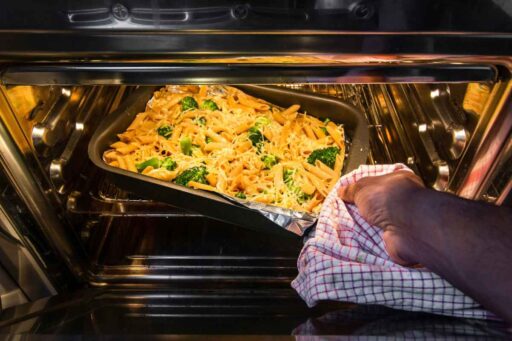
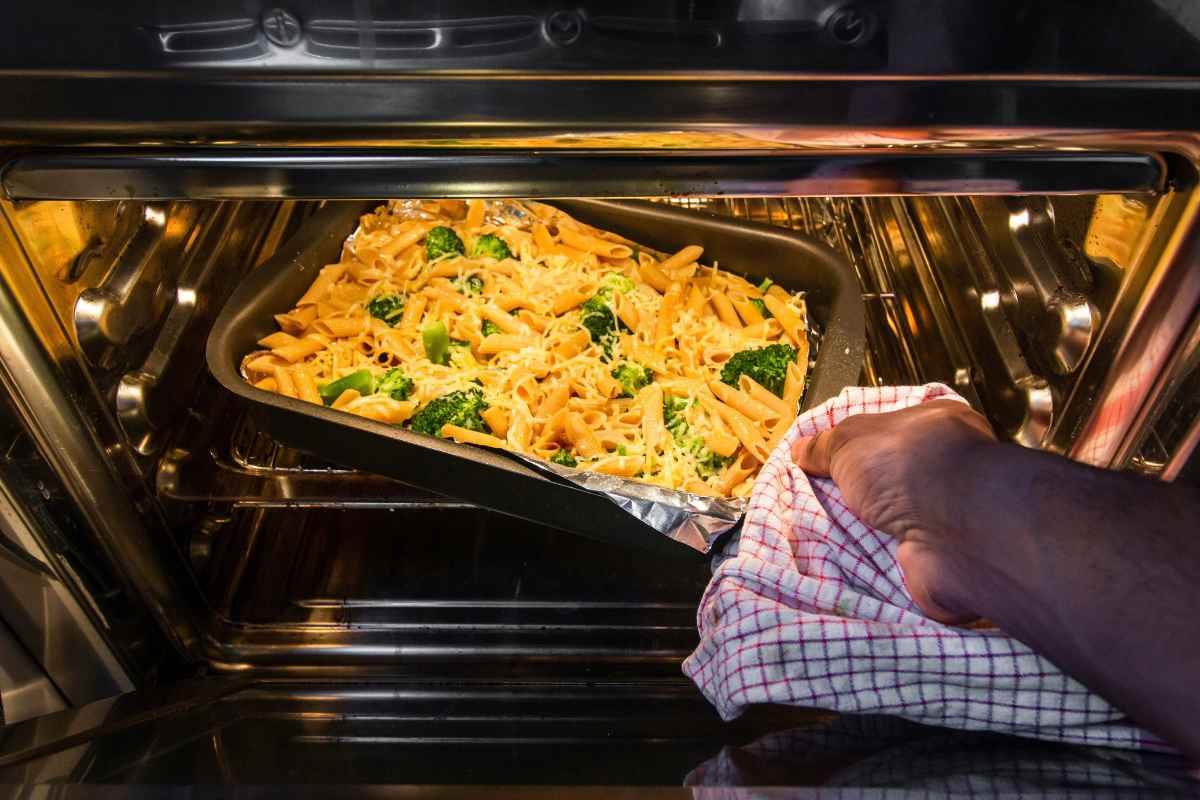

The challenge with leftover baked mac and cheese is bringing two textures back at once: a creamy center and a lightly crisp topping. Getting how to reheat baked mac and cheese right requires enough moisture to loosen the sauce without turning the pasta soggy or oily.
1. Why Baked Mac and Cheese Dries Out in the Fridge
Refrigeration changes both the pasta and cheese sauce, which is why leftovers rarely stay as creamy as they were fresh from the oven.
Understanding these changes makes how to reheat baked mac and cheese much easier because you know what moisture and texture need restoring.
- Pasta keeps absorbing sauce after cooking, leaving less free moisture around the noodles.
- Cooling changes the structure of cheese-based systems, including their protein network and fat phase, contributing to a firmer consistency after refrigeration.
- Refrigerated starches tighten, making the casserole feel thicker and less creamy.
- Exposed surfaces lose moisture faster when leftovers are not stored in an airtight container.
- Crispy toppings can soften as they absorb moisture from the filling underneath.
2. How to Reheat Baked Mac and Cheese: 4 Main Options
Different appliances change the balance between creaminess, speed, and a crisp top. For how to reheat baked mac and cheese, adding a little milk and avoiding excessive heat are two of the most reliable ways to prevent dryness or a separated sauce.
Oven Method
Oven reheating is the strongest choice for baked mac and cheese because it warms larger portions evenly while giving the topping a chance to crisp again.
- Preheat the oven to 350°F.
- Transfer the leftovers to an oven-safe dish if needed.
- Drizzle a little milk around the edges, especially if the center looks dry.
- Cover loosely with foil or an oven-safe lid.
- Bake for about 20 minutes, then check the center.
- Remove the cover and heat for roughly 10 more minutes if you want the top crisp again.
- Add a little butter or shredded cheese at the end if extra richness is needed.
Stovetop Method (Best for Speed)
Stovetop reheating works well for one or two portions when you want a creamy result without waiting for the oven.
- Place the mac and cheese in a saucepan and gently separate any firm chunks.
- Stir in about 1 tablespoon of milk for every cup of leftovers.
- Warm over medium-low heat rather than using high heat.
- Stir occasionally so the bottom does not stick or scorch.
- Cover briefly if several portions need extra help warming through.
- Finish with a little butter or shredded cheese if the sauce still feels too thick.
- Serve once the center is hot and the texture turns creamy again.
Microwave Method (Best for Single Portions)
Heating too aggressively can make the cheese sauce oily or grainy, while stirring between rounds helps the added moisture spread evenly.
- Spoon one portion into a shallow microwave-safe bowl.
- Add about 1 tablespoon of milk per cup of mac and cheese.
- Spread it into an even layer so the middle does not stay cold.
- Cover with a microwave-safe plate or slightly damp paper towel.
- Heat at 50% power for 1 minute.
- Stir, then continue in 30-second bursts until hot.
- Mix in a small amount of butter or shredded cheese if you want a smoother finish.
Toaster Oven Method
Toaster ovens work especially well for smaller baked portions when you want oven-style results without heating a full-size appliance.
- Set the toaster oven to 350°F.
- Place the leftovers in a small oven-safe dish.
- Add a light drizzle of milk around the sides rather than soaking the top.
- Cover the dish loosely with foil during the first stage.
- Check after about 20 minutes for even warmth.
- Remove the foil and continue for several more minutes if the topping needs extra crispness.
- Pull the dish out once the center is steaming and the sauce looks creamy again.
3. How to Tell When Baked Mac and Cheese Is Reheated Properly
Color alone does not tell you whether the center is ready. Look for several signs together so the sauce regains creaminess while the topping stays pleasantly crisp.
- The center is hot throughout: Spoon into the middle and check that no cold pockets remain.
- Sauce looks creamy again: Cheese should coat the pasta rather than appearing dry, oily, or grainy.
- Top is lightly crisp: Breadcrumbs or baked cheese should regain some texture without burning.
- Edges are gently bubbling: Small bubbles around the dish usually signal that the filling is thoroughly heated.
- Texture stays moist: Noodles should feel tender and coated, not stiff or dried around the edges.
- Steam rises from the center: Visible steam after stirring or cutting into the casserole is another sign that it is ready.
>>> Read more: How to Reheat Mac and Cheese in Oven and Keep It Creamy
4. How to Store Baked Mac and Cheese for Better Reheating Later
Good reheating starts before the leftovers ever reach the oven or microwave. Proper storage helps preserve moisture, prevents unwanted refrigerator odors, and makes how to reheat baked mac and cheese easier the next day.
Use an Airtight Container
Transfer leftovers to a tightly sealed container once they have cooled enough for safe refrigeration. Limiting air exposure helps slow moisture loss and prevents the pasta from absorbing strong refrigerator odors, which can affect both flavor and texture later.
Refrigerate Promptly
Do not leave baked mac and cheese sitting out for extended periods before storage. Refrigerating leftovers promptly helps preserve quality and reduces food-safety risks, while also keeping the sauce from drying further at room temperature.
Store Crispy Toppings Separately When Possible
If you know leftovers will be reheated later, storing breadcrumbs or another crisp topping separately can help preserve texture. Add it back during the final uncovered heating stage so it stays crunchy instead of absorbing moisture in the refrigerator.
Freeze Extra Portions
Freeze portions you will not eat within a few days in freezer-safe containers. Thaw them in the refrigerator before reheating when possible, or warm from frozen in the oven with extra time and added moisture.
5. FAQs about Reheating Baked Mac and Cheese
Baked leftovers need enough time to heat through without pushing the cheese sauce too far.
How long should you reheat baked mac and cheese?
At 350°F, refrigerated baked mac and cheese usually needs about 20 minutes covered, with roughly 10 additional minutes uncovered if you want a crisp top.
Should you cover baked mac and cheese when reheating?
Yes, covering it during most of the reheating time helps hold in moisture and protects the pasta from drying out.
Can you reheat baked mac and cheese twice?
It is better to reheat only the amount you plan to eat. Repeated heating and cooling can reduce creaminess and texture, while unnecessary temperature changes can also increase food-safety concerns if leftovers are not handled properly.
6. Final Thoughts
Second-day mac and cheese does not have to feel like a compromise. Once you get how to reheat baked mac and cheese right, the sauce can loosen back up, the pasta can stay tender, and the baked top can retain some of its texture. For more ways to give leftovers a better second serving, read more at TeaKoe.