
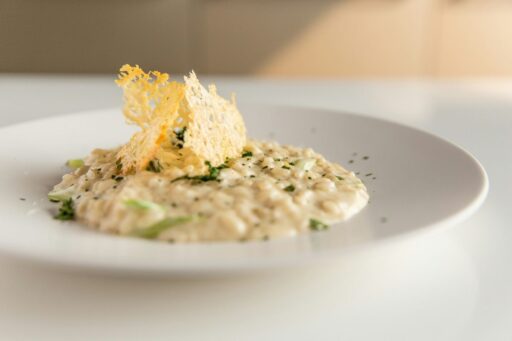
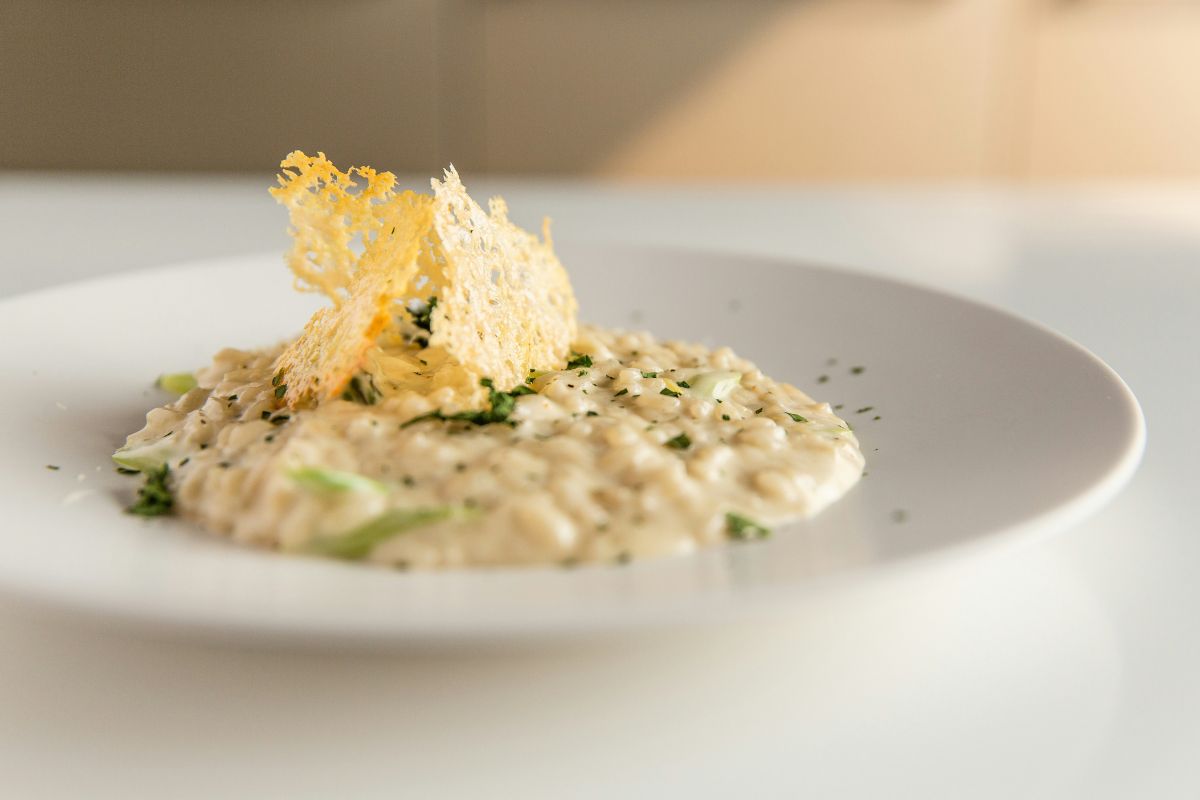

Cold risotto often becomes dense because the rice continues absorbing liquid during refrigeration. Knowing how to reheat risotto helps loosen the grains, restore their creamy consistency, and warm the dish without turning it sticky or watery.
This guide compares stovetop and microwave methods, explains which liquids work best, and covers storage and freezing concerns. Refer to TeaKoe’s article below for more useful reheating guidance.
1. Should You Reheat Risotto?
Yes, risotto can be reheated safely when it has been cooled promptly, refrigerated correctly, and warmed thoroughly.
Refrigeration naturally makes the rice thicker and drier because the grains absorb more of the surrounding liquid. Adding a small amount of broth or water and applying gentle heat helps restore creaminess. Reheated leftovers should reach 165°F (74°C) before serving.
>>> Read More: How to Reheat Cinnamon Rolls So They’re Soft and Fresh Again
2. How to Reheat Risotto Step by Step
Both stovetop and microwave reheating can produce creamy risotto when moisture is added gradually. The stovetop offers greater control, while the microwave works well for smaller portions that need to be ready quickly.
Stovetop Method
The stovetop method makes it easier to monitor texture and add liquid before the rice becomes dry. Low heat and frequent stirring help the grains loosen without allowing the bottom of the pan to scorch.
- Choose a suitable pan: Place the risotto in a saucepan or nonstick skillet with enough room for gentle stirring.
- Add liquid: Pour in approximately one tablespoon of broth or water per serving. Start with less because more can be added later.
- Set the burner to low heat: Strong heat may cause sticking or dry the outer grains before the center warms.
- Break apart the risotto: Use a wooden spoon or silicone spatula to separate cold clumps carefully.
- Stir frequently: Slow, steady movement distributes moisture and prevents the rice from catching on the bottom.
- Adjust the consistency: Add more broth in small amounts when the risotto remains too thick.
- Check the temperature: Continue heating until the dish is steaming throughout and reaches 165°F (74°C).
- Finish and serve: Remove the pan promptly, then stir in a little butter or Parmesan when desired.
Microwave Method
Microwave reheating is convenient for one or two servings, but the rice must be covered and stirred to prevent uneven heating.
Short intervals allow you to control the texture without overheating the edges.
- Transfer the risotto: Place a single portion in a microwave-safe bowl with enough space for stirring.
- Add moisture: Mix in one or two tablespoons of broth, water, milk, or cream, depending on the original recipe.
- Cover loosely: Use a microwave-safe lid or plate to hold in steam while allowing some pressure to escape.
- Heat briefly: Microwave for 45 to 60 seconds at medium power.
- Stir thoroughly: Scrape around the edges and fold the cooler center into the warmer rice.
- Repeat as needed: Continue heating in 30-second intervals until the risotto becomes creamy and evenly hot.
- Check several areas: Confirm that no cold pockets remain and that the food reaches 165°F (74°C). Covering and stirring improve microwave heat distribution.
- Rest before serving: Let the bowl stand briefly so the temperature can settle.
3. Small Tips that Make a Huge Difference for Risotto
Minor adjustments can determine whether reheated risotto becomes silky or turns into a heavy, sticky mass. Moisture, portion size, and finishing ingredients should all be handled carefully.
- Add liquid gradually: Broth, water, milk, or cream can loosen the rice, but too much may make it soupy. Begin with one tablespoon per serving and increase only when needed.
- Use low heat: Gentle warming gives the grains time to soften without scorching the bottom or rapidly evaporating the added moisture.
- Reheat smaller portions: Compact amounts warm more evenly and are easier to stir than an entire container of cold risotto.
- Stir steadily, not aggressively: Slow folding redistributes heat while preserving the grains. Vigorous stirring may make the texture overly gluey.
- Match the original flavor: Vegetable broth suits mushroom or vegetable risotto, while chicken or seafood broth works better with richer recipes.
- Finish after heating: Add butter, Parmesan, herbs, or lemon after the rice is hot. These ingredients restore richness and freshness without prolonged cooking.
- Serve immediately: Risotto thickens as it stands, so transfer it to bowls once the desired creaminess returns.
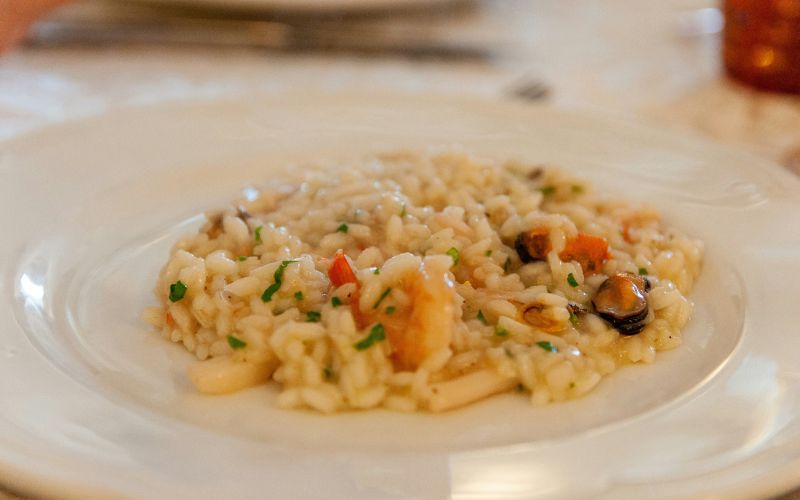
4. Everything Else You Should Know About Risotto
Choosing the correct liquid, managing leftovers, and understanding freezing limitations can improve both safety and texture.
Should broth, water, or cream be added when reheating?
Broth is usually the best option because it restores moisture while reinforcing the original savory flavor. Water works when a neutral result is preferred, while cream adds richness but may make an already heavy risotto feel overly dense.
How do you keep risotto creamy instead of sticky?
Use gentle heat, add liquid in small amounts, and stir frequently enough to separate cold clumps.
Can risotto be frozen successfully?
Freezing can alter the structure and texture of cooked rice. Some studies have found changes in firmness, adhesiveness, moistness and other texture characteristics after freezing, with ice-crystal formation contributing to structural changes.
How long does leftover risotto stay fresh?
Store risotto in a shallow, airtight container and refrigerate it promptly at 40°F (4°C) or below. Most cooked leftovers should be eaten within three to four days, while food left at room temperature for over two hours should be discarded.
5. Final Thoughts
Gentle heat and carefully measured liquid can bring refrigerated risotto back to a smooth, creamy consistency. Following how to reheat risotto successfully means choosing a suitable method, stirring regularly, and stopping before the rice becomes overly soft.
Broth restores moisture without weakening the flavor, while butter or Parmesan can refresh the final texture. TeaKoe offers practical kitchen guidance for turning thick leftovers into satisfying meals again.