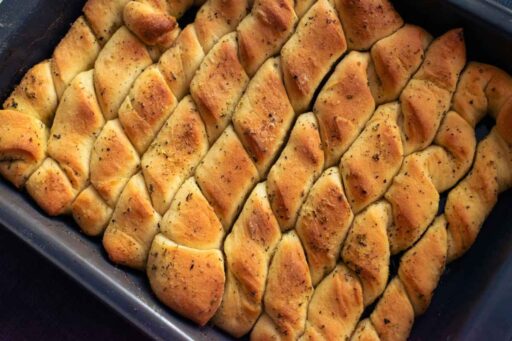
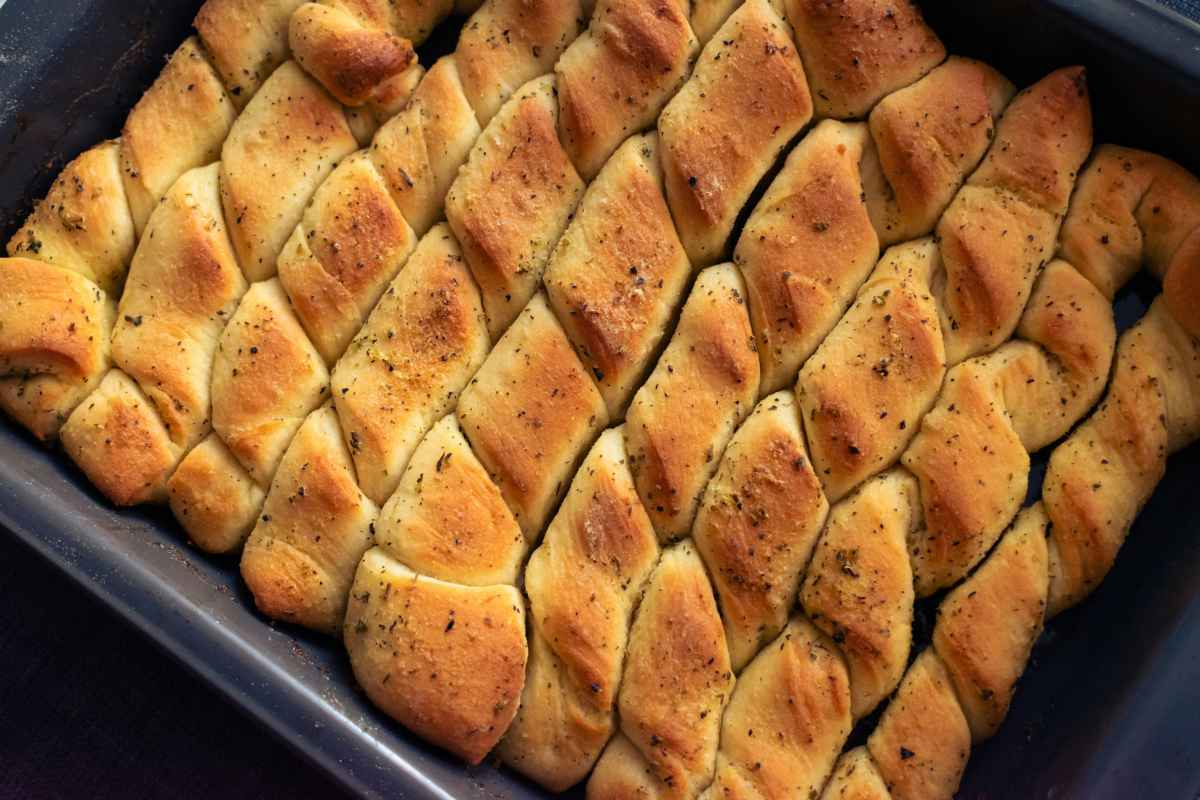

Olive Garden breadsticks can lose their signature softness after refrigeration as the surface firms and the buttery coating fades. Learning how to reheat Olive Garden breadsticks helps bring back a tender center, warm exterior, and richer garlic-butter finish without making them tough.
Storage conditions, added moisture, reheating time, and batch size all influence the texture. Refer to the TeaKoe guide below for more practical reheating methods and serving tips.
1. Why Do Olive Garden Breadsticks Turn Hard So Quickly?
Soft breadsticks begin changing texture soon after they cool because moisture moves through the bread and gradually escapes during storage.
- Moisture loss: Breadsticks slowly lose water after baking, especially when left uncovered or stored in packaging that does not seal tightly.
- Starch retrogradation: As the bread cools, starch molecules reorganize and make the interior feel denser or stale, even when the breadstick is still safe to eat.
- Refrigeration speeds up firming: Cold storage can make bread texture noticeably tougher because starch retrogradation occurs rapidly at refrigerator temperatures.
- Exposed surfaces dry faster: Breadsticks stored loosely or with gaps in the wrapping can dry the Olive Garden exterior before the center loses the same amount of moisture.
- Repeated heating removes more moisture: Warming breadsticks several times can gradually dry the crumb and toughen the crust. Reheating only the portion you plan to eat helps preserve the remaining breadsticks.
2. How to Reheat Olive Garden Breadsticks Step by Step
Getting the texture right depends on warming the bread slowly enough to protect the soft center while reviving the buttery exterior.
- Prepare the breadsticks: Remove the breadsticks from the refrigerator and unwrap them before reheating. Arrange them in a single layer so each piece warms more evenly.
- Warm them gently: Use moderate heat rather than a high temperature, which can harden the outside before the center is warm. Covering them loosely with foil can help reduce moisture loss during reheating.
- Refresh the garlic butter coating: Brush the warm breadsticks with a small amount of melted butter mixed with garlic seasoning. Adding the coating near the end helps restore flavor without making the surface greasy.
- Serve while still warm: Enjoy the breadsticks shortly after reheating, while the centers remain soft and the buttery coating is still aromatic. Letting them sit too long can make the texture firm again.
3. Tiny Finishing Touches That Bring Back the Olive Garden Experience
Small finishing details can make reheated breadsticks feel noticeably softer, richer, and more flavorful. Once the centers are warm, a few simple additions help restore the buttery, savory character people expect from Olive Garden breadsticks.
Brush with melted butter
Lightly brushing the surface with melted butter adds moisture, shine, and a richer finish without soaking the bread. Apply the butter after warming or during the final minute so the exterior stays soft rather than becoming greasy.
Add Parmesan
Finely grated Parmesan adds another layer of savory flavor while giving the breadsticks a gentle, salty finish that pairs well with garlic butter. Sprinkle it on while the breadsticks are still warm so the cheese softens slightly, clings to the surface more evenly, and blends into the buttery coating instead of falling away before serving.
Sprinkle parsley
Freshly chopped parsley brings a light herbal note and a touch of color that makes reheated breadsticks look more appetizing. Sprinkle only a small amount over the warm garlic-butter coating so the herb enhances the flavor without becoming too dominant. Dried parsley is also a convenient alternative when fresh herbs are unavailable, especially for a quick finishing touch before serving.
Wrap briefly before serving
Once the breadsticks are warm, loosely wrapping them in foil for a brief rest can help redistribute heat and retain enough moisture to keep the centers tender. Keep this resting period short, since leaving them enclosed for too long traps excess steam and can make the exterior damp or slightly chewy instead of soft, buttery, and pleasantly warm.
4. Main Concerns when Reheating Olive Garden Breadsticks
Timing, moisture, and added toppings can change the final texture more than expected when warming leftover breadsticks.
Should garlic butter be added before or after reheating?
Adding garlic butter near the end or immediately after reheating usually gives better control over moisture and flavor. Applying too much beforehand can make the surface greasy, while a light finishing brush keeps the breadsticks soft and aromatic.
Can frozen Olive Garden breadsticks be reheated directly?
Yes, frozen breadsticks can be reheated without thawing first, although they generally need more time than refrigerated ones. Following the USDA safe food temperature chart, use moderate heat so the centers warm through thoroughly to a safe serving temperature before the exterior becomes overly firm or dry.
Should breadsticks be wrapped while reheating?
Loosely wrapping breadsticks in foil can help retain moisture and protect their soft texture, especially in the oven. Avoid sealing them too tightly for too long, since excess trapped steam can leave the exterior damp rather than pleasantly tender.
>>> Read More: How to Reheat Pancakes So They Taste Fresh Off the Griddle
5. Final Thoughts
Soft, buttery breadsticks are easier to revive when heat, moisture, and timing are kept in balance. Following how to reheat Olive Garden breadsticks carefully helps restore a tender center while preventing the exterior from turning tough or dry.
A light garlic-butter finish can bring back even more flavor before serving. For more practical ways to make restaurant leftovers enjoyable again, explore TeaKoe.