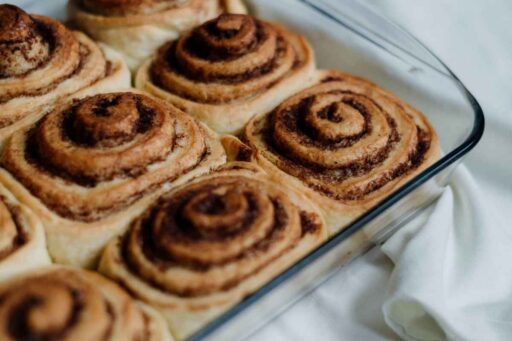
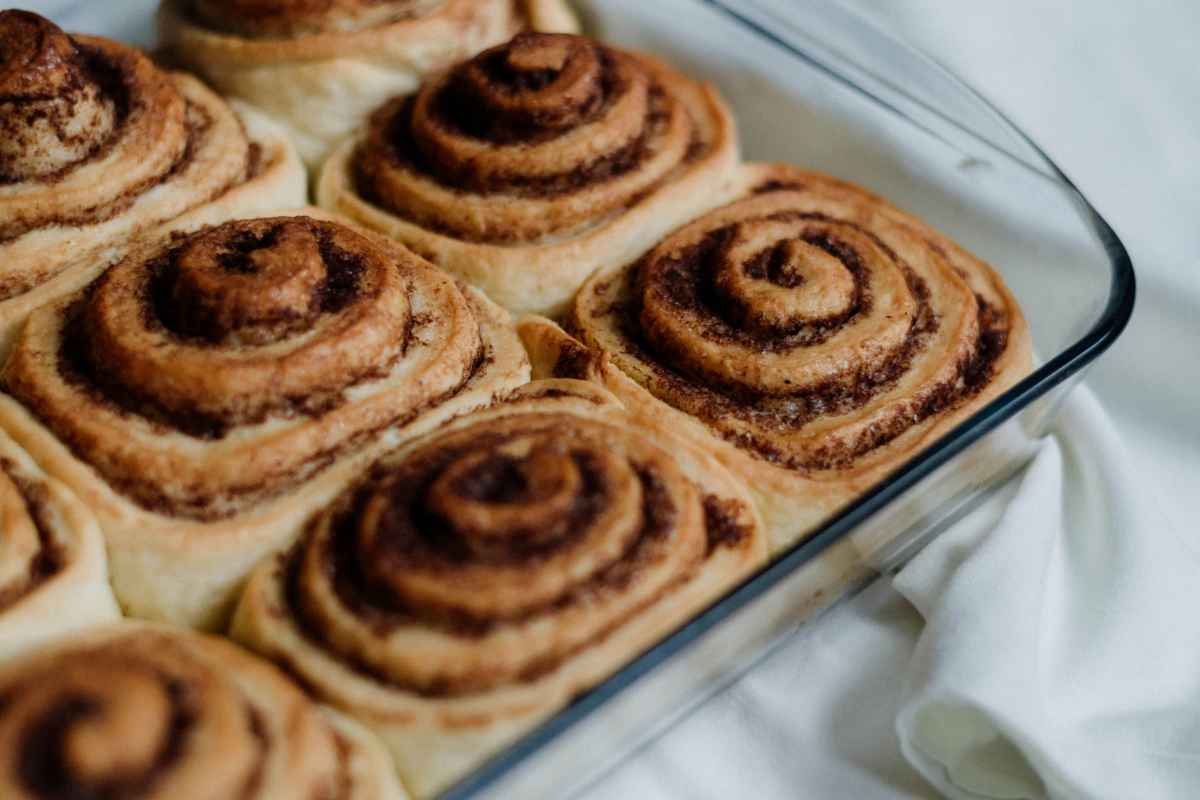

Leftover cinnamon rolls can lose their soft centers and tender texture once they cool, especially after refrigeration. Understanding how to reheat cinnamon rolls helps bring back warmth without drying the dough, hardening the edges, or melting away too much icing.
The best method depends on how many rolls you have, how quickly you need them, and whether they are frosted. Refer to the TeaKoe guide below for more reheating tips and serving ideas.
1. Why Cinnamon Rolls Dry Out so Quickly?
Cinnamon rolls lose softness as moisture escapes from the dough and the starch structure changes after baking.
- Exposure to air: Leaving rolls uncovered allows moisture to evaporate quickly, making the outer layers firm and the centers less tender.
- Refrigeration: Cold storage can speed up starch firming, causing the bread portion to feel stale even when the rolls are still safe to eat.
- Overbaking: Rolls baked too long begin with less internal moisture, so leftovers dry out faster during storage and reheating.
- Improper storage: Loose wrapping or containers that do not seal well allow both moisture loss and refrigerator air to affect the texture.
- Excessive reheating: Too much heat can evaporate remaining moisture, harden the edges, and turn once-soft cinnamon rolls dry or chewy.
2. Should You Reheat Cinnamon Rolls Before or After Adding the Icing
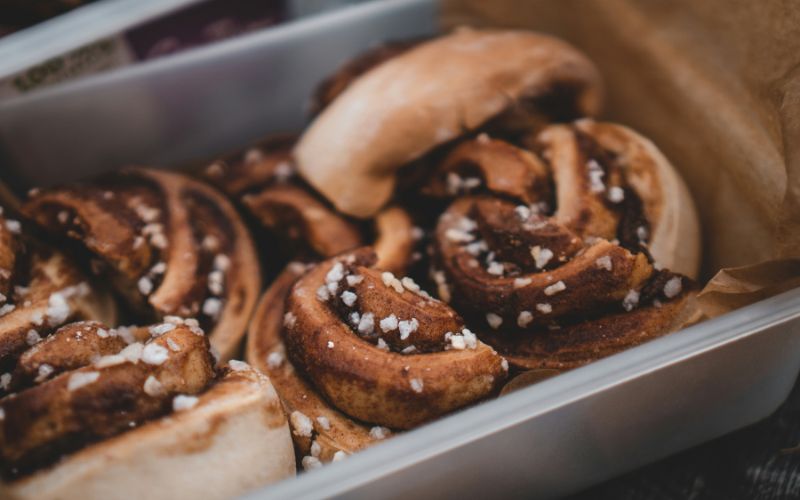
For unfrosted leftovers, reheat the cinnamon rolls first so the dough becomes soft and warm, then add fresh icing afterward.
If the rolls were already frosted, you can reheat them with the icing on, using gentle heat to avoid drying the pastry or overheating the topping.
3. How to Reheat Cinnamon Rolls Without Losing Their Bakery-Fresh Texture
The best reheating method depends on how many rolls you have, how much time is available, and whether you prefer softer or slightly toasted edges.
Gentle heat plus a little added moisture can help restore tenderness without drying the dough or overheating the icing
Oven or Toaster Oven Method
The oven is especially useful for reheating several cinnamon rolls at once because low, steady heat warms them more evenly than a quick blast of high temperature.
- Preheat the oven or toaster oven to 275°F.
- Place the cinnamon rolls on a baking tray.
- Put a shallow oven-safe dish containing water on a lower rack when using a full oven.
- Warm the rolls for about 10–15 minutes.
- Check the centers before adding extra time.
- Remove them once heated through and serve promptly.
- Add fresh icing afterward if the rolls were stored unfrosted.
Microwave Method with Water Trick
Microwaving is the fastest option for one or two rolls, but moisture is important because microwave heating can make bread firm once it cools.
- Place one cinnamon roll on a microwave-safe plate.
- Lightly dampen a paper towel with water.
- Loosely wrap or cover the roll with the damp towel.
- Microwave for about 20-30 seconds to start.
- Check the center and add short intervals if needed.
- Avoid heating continuously for too long.
- Let the roll rest briefly before eating, especially if the icing is hot.
Air Fryer Method
An air fryer warms cinnamon rolls quickly while creating a slightly toasted exterior around a softer center.
- Preheat or set the air fryer to 300°F.
- Place the roll on a small piece of foil or an air-fryer-safe liner.
- Arrange rolls with space between them when reheating more than one.
- Heat for about 3 minutes.
- Check whether the center is warm.
- Add 1-2 minutes if additional heating is needed.
- Serve immediately to enjoy the contrast between the lightly toasted outside and soft center.
Skillet Method
A skillet is a practical stovetop alternative when you do not want to turn on the oven. Low heat and a covered pan help warm the roll gradually, while a small amount of moisture or butter can limit drying
Frying-pan reheating is also used as an alternative method in independent cinnamon-roll testing.
- Place a skillet over low heat.
- Add the cinnamon roll once the pan is gently warm.
- Add a small dab of butter or a few drops of water nearby if extra moisture is needed.
- Cover the skillet with a lid to trap gentle heat.
- Warm for several minutes, checking frequently.
- Turn the roll only if needed for more even heating.
- Remove it as soon as the center is warm and the bottom remains soft rather than crisp.
4. Mistakes That Turn Leftover Cinnamon Rolls Hard and Chewy
Texture problems usually happen when reheating removes more moisture than it restores.
Reheating at Too High a Temperature
Strong heat can warm the outside faster than the center, causing the edges to dry out before the roll is heated through. Lower temperatures and shorter heating periods usually produce better results.
Skipping Added Moisture
Cinnamon rolls can lose moisture quickly after refrigeration or overnight storage. Using a damp paper towel in the microwave, covering rolls loosely in the oven, or adding another appropriate source of moisture can help limit evaporation and keep the crumb softer during reheating.
Heating for Too Long
Extra reheating time can turn tender dough dense, dry, and chewy. Start with the shortest recommended time, check the center, and continue in brief intervals only when necessary.
Reheating Rolls Uncovered
Leaving cinnamon rolls exposed during longer oven reheating allows moisture to escape from their surface.
Loosely covering them with foil can help retain softness while the centers warm, particularly when reheating several rolls or thicker pastries that require more time.
Ignoring the Icing
Frosting reacts differently to heat than the dough underneath it. Previously frosted rolls should be warmed gently to prevent the icing from overheating or disappearing into the pastry, while unfrosted leftovers can be reheated first and topped with fresh icing afterward.
>>> Read More: How to Reheat Frozen Lasagna Straight From the Freezer?
5. Questions about Reheating Cinnamon Rolls
Storage conditions, reheating time, and moisture levels all influence how cinnamon rolls taste the second time around.
Why do cinnamon rolls become dry after reheating?
Cinnamon rolls dry out when reheating, which drives additional moisture from the dough, especially at high temperatures or for too long. Refrigeration can also make the crumb feel firmer, so gentle heat and a little moisture usually give better results.
Can you reheat frozen cinnamon rolls?
Yes. Frozen cinnamon rolls can be reheated after thawing in the refrigerator or warmed from frozen with extra time, depending on the method. Covering them during oven reheating can help prevent the edges from drying before the centers become warm.
How long do cinnamon rolls stay fresh?
At room temperature, properly covered cinnamon rolls are usually best within about one to two days, while refrigeration can extend storage to several days.
Can cinnamon rolls be reheated more than once?
It is better to reheat only the portion you plan to eat. Following official USDA food safety guidelines, repeated heating and cooling can dry the rolls further and may create food-safety concerns if they spend too long at room temperature, so store leftovers promptly and warm individual servings as needed.
6. Final Thoughts
Soft, gooey cinnamon rolls are easier to revive when you use gentle heat, preserve moisture, and avoid reheating longer than necessary. TeaKoe offers practical kitchen guidance for making leftovers taste more enjoyable.
Following how to reheat cinnamon rolls with the right method helps restore warmth, tenderness, and that fresh-from-the-bakery texture without leaving the dough dry or chewy.