
Fossils can turn a simple dinosaur question into a surprisingly strange story, especially when one species is remembered for its unusual mouth. This guide answers what dinosaur has 500 teeth and shows how paleontologists used its fossils to understand its feeding habits. For more engaging prehistoric facts, continue with the TeaKoe guide below.
1. What Dinosaur Has 500 Teeth?
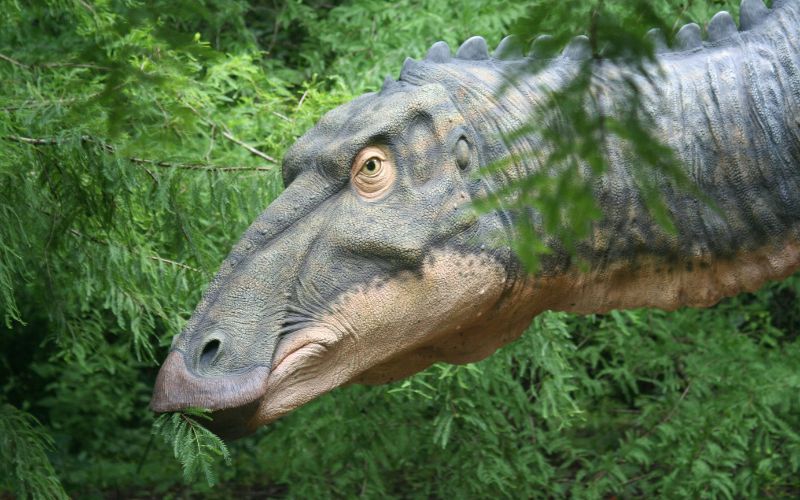
What kind of dinosaur has 500 teeth? The dinosaur with 500 teeth is Nigersaurus taqueti. This unusual herbivore lived about 110 million years ago in what is now Niger, Africa. Its wide, flat mouth held rows of replaceable teeth, allowing it to graze low-growing plants efficiently.
Nigersaurus is often nicknamed the “Mesozoic cow” because of the way it likely fed close to the ground. Unlike giant meat-eating dinosaurs, it stood out for its delicate skull, broad jaw, and constantly renewing teeth.
2. Meet Nigersaurus: The “Lawnmower”
Nigersaurus was a small sauropod with an unusually broad, straight-edged mouth built for grazing low plants.
Its jaw worked almost like a prehistoric lawnmower, trimming vegetation close to the ground with rows of replaceable teeth. National Geographic notes that Nigersaurus had around 500 teeth and replaced them quickly, making it one of the most unusual plant-eaters ever studied.
3. The Unique Anatomy of Nigersaurus
Nigersaurus had one of the strangest body designs in dinosaur history, with features shaped almost entirely around ground-level feeding.
The Unique Jaw and Dental Battery
The most striking feature of Nigersaurus was its highly specialized feeding system, which was surprisingly complex for a sauropod.
- The Muzzle: Unlike the rounded snouts seen in many other sauropods, Nigersaurus had a broad, straight-edged muzzle. Its mouth looked almost like the intake of a vacuum cleaner, allowing it to sweep across low plants while feeding.
- Tooth Batteries: Nigersaurus had more than 50 tightly packed rows of teeth arranged into dental batteries. Each tooth position held several replacement teeth stacked behind the active one, giving it more than 500 teeth in the mouth at once.
- Rapid Replacement: Its teeth wore down quickly from constant grazing, so they were replaced at an unusually fast rate, about every 14 days.
- Forward Alignment: The tooth-bearing bones in its jaw were rotated outward, placing the teeth at the very front of the face.
An Air-Filled Skeleton
To carry such a specialized skull on a long neck, Nigersaurus had a skeleton designed to stay extremely light.
- Pneumatic Vertebrae: The bones in its spine were filled with air spaces instead of being fully solid. These hollow structures made the skeleton much lighter, and in some areas, the bone walls were incredibly thin.
- Feather-weight Skull: Its skull was also filled with large openings and air-filled spaces. Because so little solid bone connected the muzzle to the back of the skull, the head remained light enough for its feeding posture and body structure.
Posture and Lifestyle
The body of Nigersaurus suggests that it was built for browsing close to the ground rather than reaching tall trees.
- “Mesozoic Cow”: Nigersaurus was about 30 feet long and had a shorter neck than many other sauropods. Studies of its inner ear suggest its head is naturally tilted downward, placing its mouth near ground level while feeding.
- Diet: Instead of stripping leaves from high branches, Nigersaurus likely ate soft, low-growing plants such as ferns and horsetails. These plants grew in lush floodplain environments where they could graze steadily.
- Underdeveloped Smell: Skull scans suggest that its sense of smell was not especially strong. Rather than relying on scent to find food, Nigersaurus likely used its broad mouth and downward-facing jaw to gather plant matter as it moved.
4. What Did Nigersaurus Eat?
Nigersaurus was a plant-eating dinosaur that specialized in soft, low-growing vegetation rather than tall tree leaves. Its diet likely included ferns, horsetails, and early flowering plants that grew across ancient floodplains.
Since grasses had not yet become common, this 30-foot sauropod fed more like a ground grazer than a tree browser.
With its wide, straight-edged muzzle, Nigersaurus could sweep close to the ground and crop plants efficiently, earning its nickname as a “Mesozoic cow.”
5. Other Dinosaurs With Mind-Blowing Tooth Counts
What dinosaur has over 500 teeth? Prehistoric teeth were not just for biting; they reveal how each dinosaur survived, fed, and adapted to its environment.
Some herbivores developed remarkable dental systems with hundreds of teeth, helping them handle everything from soft leaves to tough, fibrous plants.
>>> Read more: Taco Bell Menu 2026: Popular Orders, Breakfast, Secret Items
Triceratops
Triceratops had one of the most advanced dental systems among herbivorous dinosaurs. Its jaws held hundreds of teeth arranged in dense dental batteries, often estimated at 400 to 800 teeth.
As older teeth wore down, new ones moved into place, allowing Triceratops to slice through tough, fibrous plants efficiently.
Diplodocus
Diplodocus had long, narrow, peg-like teeth positioned mainly at the front of its jaws. Instead of chewing food, it likely used these teeth like a rake to strip leaves and soft vegetation from branches.
Because this feeding style caused heavy wear, its teeth were replaced roughly every 30 to 35 days.
Ouranosaurus
Ouranosaurus had about 40 to 44 tooth positions across its skull, with roughly 20 to 22 teeth on each side of the upper jaw and a similar number in the lower jaw.
Its broad, toothless beak cropped plants, while diamond-shaped cheek teeth farther back helped grind tough vegetation.
6. Final Words
Dinosaur teeth tell a fascinating story about how ancient animals lived, fed, and adapted to their environments. So, what dinosaur has 500 teeth? It’s Nigersaurus, a strange herbivore with a wide muzzle, fast-replacing teeth, and a body built for grazing close to the ground.
Its unusual anatomy shows that not every dinosaur relied on size, claws, or sharp jaws to stand out. From Triceratops to Diplodocus and Ouranosaurus, prehistoric tooth design reveals just how diverse plant-eating dinosaurs could be. For more curious facts and easy-to-enjoy science stories, explore more with TeaKoe.