
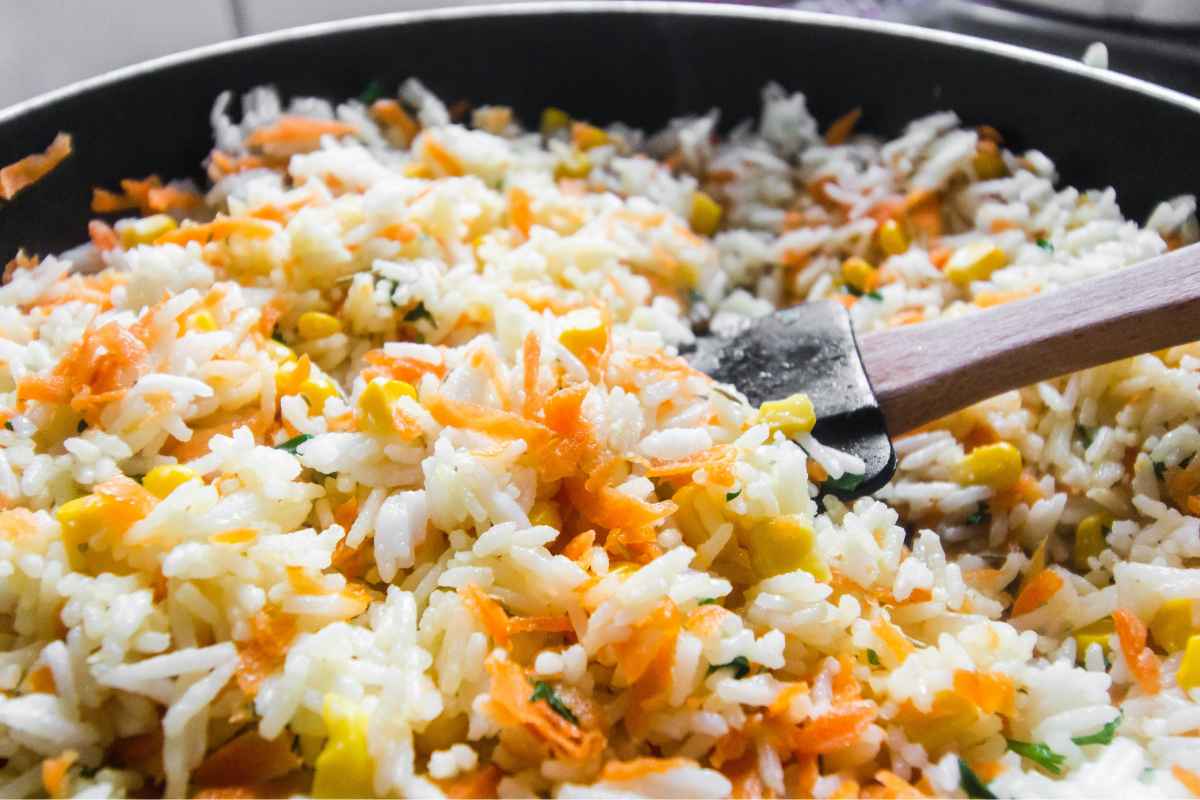

Refrigerated rice rarely keeps the same soft texture it had when freshly cooked, but that does not mean it is beyond saving. How to reheat rice without microwave comes down to restoring lost moisture while warming the grains gently enough to avoid mushiness or scorching.
Stovetop steaming works well for smaller servings, while the oven suits larger portions. Explore TeaKoe’s related guides and articles for more practical leftover solutions.
1. Why Does Leftover Rice Become Hard in the Fridge?
Cooling changes more than the temperature of cooked rice; it also changes the structure of its starches and how moisture is distributed through each grain.
The Starch Firms Up as Rice Cools
Cooked rice contains gelatinized starch that gradually reorganizes as it cools, a process often called starch retrogradation.
The grains become firmer and less tender, which is why how to reheat rice without microwave usually involves adding moisture as well as heat.
Moisture Moves Out of the Grains
Some of the water that originally softened the rice migrates during refrigeration. Even when rice is stored in a sealed container, the surface can become noticeably drier.
Gentle steaming during reheating helps return enough moisture to soften the grains without soaking them.
Cold Rice Naturally Clumps Together
As rice chills, neighboring grains can stick together and form compact clumps. Heating a solid block directly makes even reheating harder because the outside warms before the center. Breaking the rice apart gently before adding it to the pan solves much of this problem.
Poor Storage Accelerates Drying
Containers that are loosely covered allow additional moisture to escape into the refrigerator. Rice stored this way becomes harder much faster than rice kept tightly sealed.
>>> Read More: How to Reheat Rice on Stove Without Drying It Out Today
2. How to Reheat Rice Without a Microwave?
Bringing rice back to life requires surprisingly little liquid, provided that moisture stays trapped around the grains long enough to create steam.
The Stovetop Method
Small portions benefit from the stovetop because you can watch the rice closely and adjust moisture before it dries or sticks.
Following standard leftover safety guidelines, ensuring leftover rice is heated thoroughly until piping hot prevents foodborne illness while restoring a soft texture.
- Gently loosen refrigerated rice with a fork or your fingers before putting it in the pan.
- Transfer about one cup of rice to a small saucepan.
- Add approximately two tablespoons of water or broth per cup.
- Cover the pan tightly with a lid to capture the steam.
- Set the burner to low heat rather than trying to warm the rice quickly.
- Stir gently once or twice if clumps remain.
- For how to reheat rice without microwave while preserving separate grains, avoid excessive stirring because it can make the rice pasty.
- Continue until the rice is steaming, soft, and thoroughly heated.
- Fluff with a fork just before serving.
The Oven Baking Method
Large batches are easier to manage in the oven because the rice can spread across a wide baking dish and heat at the same pace.
- Preheat the oven to 300°F.
- Break apart large clumps before transferring the rice to a baking dish.
- Spread the rice in an even layer rather than leaving it piled in the center.
- Add around two tablespoons of water or broth for every cup of rice.
- Cover the dish tightly with foil so the added liquid turns into trapped steam.
- Bake for about 15 minutes, checking larger batches if they need a little more time.
- Remove the foil carefully because hot steam may escape.
- Fluff the grains with a fork before serving.
- Use this method when reheating several portions at once, since the oven provides more room than a saucepan.
3. How Do You Stop Rice From Sticking or Burning at the Bottom of the Pan?
Sticking usually starts when the pan gets hotter than the available moisture can handle. Protecting the bottom layer requires a combination of low heat, enough liquid, and occasional movement rather than continuous stirring.
Start With Enough Moisture
Add a small amount of water or broth before turning on the heat instead of waiting for the rice to begin sticking. Around two tablespoons per cup is a useful starting point.
Keep the Burner Low
High heat can evaporate added water before it has time to loosen the grains. For how to reheat rice without microwave on the stovetop, low heat gives steam time to move through the rice and reduces the risk of a scorched layer forming underneath.
Use a Tight-Fitting Lid
Steam escaping from an uncovered pan means less moisture remains available to soften the rice. Keep the saucepan covered for most of the reheating period. A snug lid also lets you use lower heat because trapped steam does much of the warming.
Break Up Dense Clumps First
Large refrigerated clumps force you to heat the pan longer before the center becomes warm. Loosen them before reheating so every grain receives moisture and heat more evenly.
Stir Gently, Not Constantly
Occasional gentle stirring prevents the bottom layer from staying against the hot pan too long. Constant aggressive stirring, however, releases more starch and can turn the rice gummy.
4. FAQs About Reheating Rice Without a Microwave
Rice variety, portion size, and whether the grains are refrigerated or frozen can slightly change the reheating process.
Learning how to reheat rice without microwave ensures you bring back fluffy, soft grains through methods without drying out the rice.
How much water should you add when reheating rice?
About two tablespoons of water or broth per cup of cooked rice is a useful starting point for stovetop or oven reheating. Add only a little more if the rice still appears unusually dry, since excess liquid can make the grains overly soft.
Can you reheat rice in a rice cooker?
Yes, if your rice cooker includes a reheating, steaming, or keep-warm function suitable for cooked rice. Add a small splash of water, loosen the grains, and follow the appliance instructions rather than running a complete uncooked-rice cycle.
Can you reheat frozen rice without a microwave?
Yes. Frozen rice can be reheated in a covered saucepan with a little water over low heat or transferred to a covered baking dish and warmed in the oven. Break apart the rice as it softens so heat and steam can reach the center evenly.
How long does rice take to reheat on the stove?
Small portions usually need only several minutes over low heat once the pan is covered and steaming.
Exact timing depends on quantity and refrigerator temperature, so judge readiness by whether the grains are hot, tender, and evenly warmed rather than following the clock alone.
5. Final Thoughts
Leftover rice can return to the table soft, warm, and pleasantly fluffy without ever going near a microwave. The key to how to reheat rice without microwave is restoring lost moisture gradually so the grains heat evenly without becoming soggy or scorched.
Whether you rely on the stovetop or oven, a little steam and careful timing can transform yesterday’s rice into a satisfying second serving. For more smart ways to refresh leftovers, explore TeaKoe’s practical kitchen guides.