
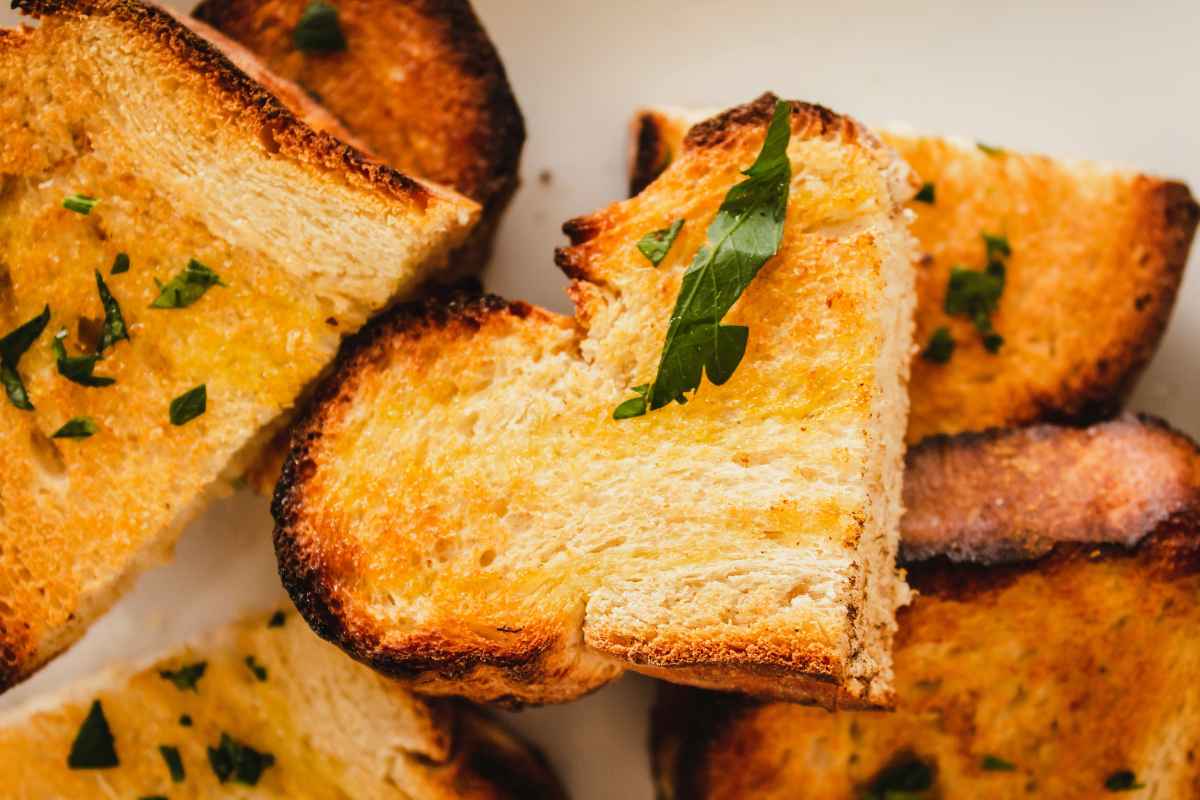

Garlic bread is at its best when the crust has a light crispness and the buttery center stays soft and fragrant. If you’re wondering how to reheat garlic bread without losing that balance, this instruction walks through four reliable methods for fresh and frozen pieces.
It also covers when to use foil, how to prevent excessive drying, and which common reheating mistakes can compromise the final texture.
1. Should You Wrap Garlic Bread in Foil When Reheating?
Yes, wrapping garlic bread in foil is especially helpful when using the oven. The foil traps enough moisture to keep the interior soft while protecting the butter and garlic from excessive browning.
For a crisper crust, open the foil during the final few minutes of reheating.
2. How to Reheat Garlic Bread? (4 Best Methods)
Each reheating method produces a slightly different balance between crisp crust and soft interior. Choosing the right one depends on portion size, available time, and whether you prefer tender bread or a more toasted finish.
| Method | Crust Texture | Interior Texture | Time | Best For |
|---|---|---|---|---|
| Oven | Lightly crisp | Soft and buttery | 10-15 minutes | Whole loaves and larger portions |
| Air fryer | Extra crisp | Soft if not overcooked | 3-5 minutes | Individual slices |
| Stovetop skillet | Crisp underneath | Moist and cheesy | 4-6 minutes | Cheesy garlic bread |
| Microwave | Very soft | Moist | 15-30 seconds | One slice and quick reheating |
The Oven Method (Best for Whole Loaves & Soft Interior)
The oven gives you the most even results when reheating a whole loaf or several pieces at once. For how to reheat garlic bread without drying it out, foil helps protect the buttery interior while the bread gradually warms through.
- Preheat the oven to about 350°F.
- Place the garlic bread on a sheet of foil.
- Wrap it loosely but securely so moisture stays inside.
- Put the wrapped bread directly on a baking sheet or oven rack.
- Heat slices for around 8 to 10 minutes or a larger loaf for roughly 10 to 15 minutes.
- Open the foil during the final 2 to 3 minutes if you want a crisper crust.
- Remove once the center feels hot and the butter has softened again.
The Air Fryer Method (Fastest Way to Get Extra Crispy Slices)
Air fryers are ideal when the crust has gone soft, and you want to bring back a stronger crunch quickly. Master how to reheat garlic bread in an air fryer by keeping a close eye on the timer, as the circulating heat works fast and can harden the edges if left too long.
- Preheat the air fryer to about 320°F to 350°F if your model benefits from preheating.
- Arrange the garlic bread in a single layer.
- Leave a little space between slices for airflow.
- Heat for 2 to 3 minutes, then check the texture.
- Continue for another minute or two if needed.
- Remove as soon as the edges are crisp and the center is warm.
- Avoid stacking slices because trapped steam can keep the surface soft.
The Stovetop Skillet Method (Best for Cheesy Garlic Bread)
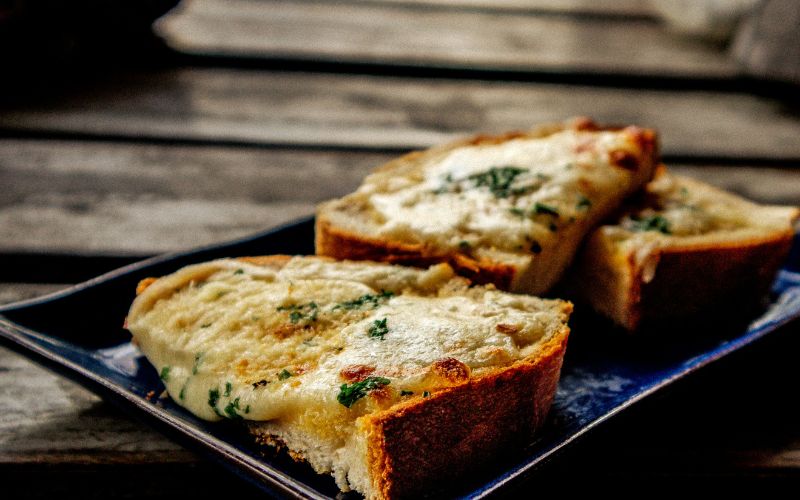
A covered skillet works particularly well for cheesy garlic bread because it can crisp the bottom while gently melting the topping. Low heat gives the cheese time to soften without burning the bread underneath.
- Place a skillet over low to medium-low heat.
- Arrange the garlic bread in a single layer with the cut side facing up.
- Cover the pan with a lid to trap gentle heat.
- Warm for about 3 to 5 minutes.
- Check the underside regularly so it does not burn.
- Remove the lid briefly at the end if excess moisture has collected.
- Serve once the cheese is melted and the bread feels hot throughout.
The Microwave Method (Quick Fix for Single Slices)
Microwaving is convenient when you only need one slice, but it will not restore much crustiness. Short heating times are essential because garlic bread can become chewy or tough once it sits too long in the microwave.
- Place one slice on a microwave-safe plate.
- Cover it loosely with a slightly damp paper towel if the bread feels dry.
- Heat for about 10 to 15 seconds.
- Check the center and add another 5 to 10 seconds if needed.
- Stop once the bread feels warm and soft.
- Eat it immediately because microwave-reheated bread can firm up quickly as it cools.
>>> Read More: How to Reheat Cornbread for a Moist Center and Perfect Edges
3. What are the Common Mistakes When Reheating Garlic Bread?
Garlic bread is forgiving, but too much heat or trapped moisture can quickly change its texture. Avoiding a few common mistakes makes it easier to keep the center buttery while restoring just enough crispness around the edges.
Using Too Much Heat
High temperatures may brown the garlic and butter before the center of the bread is properly warmed. Moderate heat gives moisture time to redistribute through the crumb.
When following how to reheat garlic bread, use higher heat only briefly if you want extra crispness at the end.
Leaving the Bread Uncovered Too Long
Exposing a whole loaf to dry oven heat for the entire reheating time can make the crust hard and the center dry. Wrapping it in foil for most of the process helps retain moisture, while uncovering it briefly at the end restores some crunch.
Overheating in the Microwave
Microwave reheating is fast, so bread can easily become overheated. Excessive heating followed by cooling can leave the crumb firmer or tougher, as bread texture is influenced by moisture redistribution and starch retrogradation.
Use short intervals and stop once the bread is sufficiently warm.
Crowding the Air Fryer Basket
Microwave reheating is fast, so bread can easily become overheated. Anyone researching how to reheat garlic bread should note that excessive heating followed by cooling leaves the crumb firmer or tougher due to moisture redistribution and starch retrogradation.
Reheating Until the Butter Dries Out
Garlic bread only needs to become warm enough for the butter to soften and the center to heat through. Leaving it in longer can evaporate moisture and make both the topping and crumb feel dry, even if the crust looks perfectly toasted.
4. FAQs About Reheating Garlic Bread
The best temperature and method depend on whether the bread is fresh, refrigerated, frozen, sliced, or topped with cheese.
What temperature should you reheat garlic bread at?
Around 350°F works well for oven reheating because it warms the bread gradually without browning the garlic too quickly. Air fryers can also work around 320°F to 350°F, although slices usually need only a few minutes.
Should you wrap garlic bread in foil when reheating it?
Yes, particularly for whole loaves or thicker pieces in the oven. Foil helps keep the interior soft and prevents the exposed butter from browning too quickly. Open the foil near the end if you want a crisper exterior.
Can you reheat frozen garlic bread?
Yes. Frozen garlic bread can usually go directly into the oven or air fryer without thawing first. It will need a few extra minutes compared with refrigerated bread, so check both the center and crust before serving.
Can you reheat garlic bread more than once?
It is better to reheat only the portion you plan to eat. Repeated heating can dry the bread, reduce flavor, and create unnecessary food-safety concerns if leftovers move in and out of refrigeration several times.
5. Final Thoughts
Garlic bread can regain its rich, buttery texture with the right balance of heat and moisture. How to reheat garlic bread depends on whether you want a softer center, a crisper crust, or a quick single-slice solution.
TeaKoe offers more practical reheating ideas for handling everyday leftovers with better results. Choosing the right method for the portion helps preserve the bread’s flavor, softness, and satisfying bite.