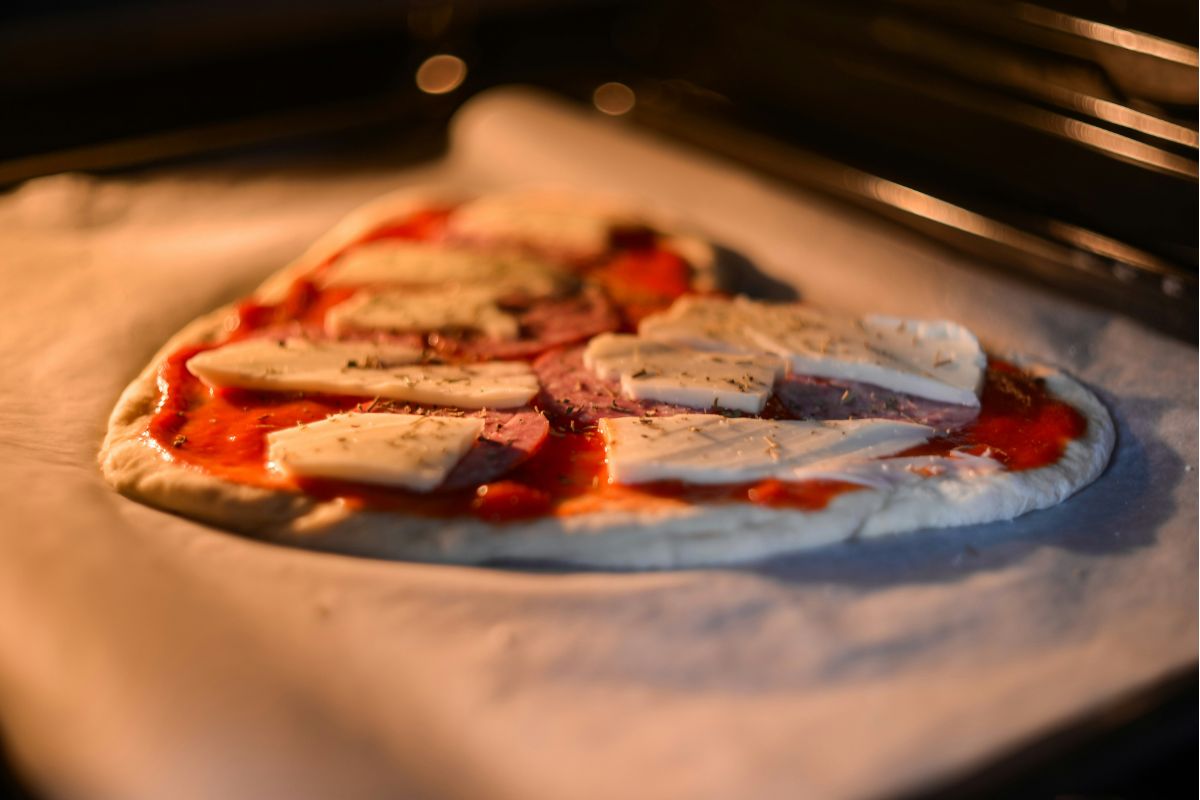

Leftover pizza can regain a crisp base, warm toppings, and smoothly melted cheese when reheated with controlled heat. Knowing how to reheat pizza in toaster oven helps you avoid the soggy texture of a microwave without heating an entire conventional oven.
This guide covers texture preferences, step-by-step instructions, timing, and common reheating problems. Refer to TeaKoe’s article below for more practical kitchen guidance.
1. Decide What You Want Your Pizza to Taste Like
Temperature, tray placement, and heating time can produce noticeably different results from the same leftover slice.
| Desired Result | Temperature and Setup | Recommended Approach | What to Watch For |
|---|---|---|---|
| Extra crispy crust | Use 400°F and place the slice on a preheated tray or rack. | Heat uncovered until the underside becomes firm and the edges turn golden. | Check frequently because thin crust and exposed toppings can burn quickly. |
| Soft New York-style slice | Use 350°F to 375°F on a foil-lined tray. | Add a tiny splash of water near the crust and heat gently. | Avoid excessive water, which can make the base soggy instead of flexible. |
| Extra-melty cheese | Use 375°F and place the slice on a tray. | Cover loosely with foil for the first few minutes, then uncover briefly. | Remove the pizza once the cheese bubbles so the crust does not become dry. |
| Balanced texture | Use 375°F on a foil-lined metal tray. | When learning how to reheat pizza in toaster oven, heat for 5 to 8 minutes until the base crisps and the cheese softens. | Look for lightly golden edges and a hot center without darkened toppings. |
>>> Read More: How to Reheat Frozen Pizza Without Losing the Crispy Crust
2. How to Reheat Pizza in Toaster Oven
A toaster oven provides concentrated heat that can restore crispness quickly, but the smaller chamber also makes pizza easier to overcook.
- Preheat the toaster oven: Set the appliance to 375°F and allow it to heat fully. Starting with a warm chamber helps the bottom crisp rather than gradually absorbing heat and becoming leathery.
- Prepare the metal tray: Cover the toaster oven tray with foil to catch melted cheese, oil, or loose toppings. Smooth the foil flat so the pizza sits evenly and does not tip toward one side.
- Arrange the slices properly: Place the pizza on the lined tray in a single layer. Leave a little space between slices so hot air can circulate instead of trapping moisture underneath overlapping crusts.
- Add moisture only when needed: When the crust feels unusually dry, flick a tiny amount of water onto its outer edge or place a small drop near the side of the tray.
- Place the tray in the center: Slide it onto the middle rack whenever possible. Positioning pizza too close to the upper heating element can brown the cheese before the crust becomes crisp.
- Heat for 5 to 8 minutes: Begin checking thin slices near the five-minute mark. Thick crust, deep toppings, or refrigerated slices with dense cheese may require closer to eight minutes.
- Watch the cheese and crust: The pizza is nearly ready when the cheese begins to bubble, and the crust edges turn lightly golden.
- Adjust the position if necessary: Move the tray lower when the cheese browns too quickly or slightly higher when the toppings remain cool.
- Remove the tray carefully: Use oven mitts because the compact metal tray becomes extremely hot.
- Rest for one minute: Allow the slice to cool briefly before eating. This short pause helps the cheese settle, reduces the risk of burns, and lets the crisp crust firm slightly.

3. How Long to Reheat Pizza in a Toaster Oven
Preheat the toaster oven to 375°F-400°F and warm a standard pizza slice for approximately 5 to 8 minutes, adjusting the time according to crust thickness and toppings.
Thin-crust pizza may heat more quickly, while thick or heavily topped slices can require additional time.
For food safety, USDA research recommends reheating leftovers to an internal temperature of 165°F (73.9°C). Remove the pizza once it is thoroughly heated and the underside reaches your preferred level of crispness.
4. FAQs about Reheating Pizza
Rack position, slice quantity, and convection settings can change how quickly leftover pizza warms.
Should pizza go directly on the rack or on a tray?
Placing pizza directly on the rack can make the bottom crispier because hot air reaches more of the crust. However, a foil-lined tray is cleaner and safer when the slice contains loose toppings, heavy sauce, or cheese that may drip.
Why does the cheese brown before the crust crisps?
The slice may be positioned too close to the upper heating element, causing the toppings to receive stronger heat than the base. Move the tray to a lower rack, reduce the temperature slightly, or cover the top loosely with foil until the crust firms.
Can multiple slices be reheated at once?
Yes, several slices can be reheated together when they fit in a single layer without overlapping. Leave space between them and expect the process to take slightly longer because a crowded tray reduces airflow and adds more cold food to the oven.
Is convection mode better for leftover pizza?
Convection mode can produce a crisp crust more quickly by circulating hot air around the slice. Lower the temperature slightly or check the pizza earlier to prevent dry edges and overly browned cheese.
How do you stop pizza from becoming too dry?
Use moderate heat, avoid leaving the pizza inside after the cheese begins bubbling, and add only a tiny amount of water when the crust already feels dry. A brief foil covering can also protect delicate toppings while the base warms.
5. Final Thoughts
Moderate heat and careful timing can turn refrigerated pizza into a crisp, satisfying slice rather than a dry or soggy leftover. Mastering how to reheat pizza in toaster oven begins with choosing the texture you prefer, arranging slices in one layer, and checking them before the cheese overbrowns.
Small adjustments to moisture, rack position, and convection settings can improve the final result. TeaKoe offers practical kitchen guidance for making everyday leftovers taste freshly prepared again.