

Cold bacon may lose the crisp bite and savory appeal that make it such a breakfast favorite, but a careful reheating method can bring both back without overcooking the strips. Temperature, thickness, and the amount you are warming all influence the result.
This TeaKoe guide explains how to reheat bacon with practical methods and texture-saving tips for a more satisfying, freshly cooked experience.
1. What’s the Best Way to Reheat Bacon?
Each reheating method offers a different balance of speed, crispness, and convenience, so the best option depends on how much bacon you have and the texture you prefer.
Air Fryer
The air fryer is an excellent choice for restoring crispness quickly. Circulating hot air reheats the bacon evenly while allowing excess grease to drain away, making it especially useful for small to medium portions.
Oven
The oven works best when reheating a larger batch of bacon at once. Steady, dry heat warms multiple strips evenly and helps maintain crisp edges without requiring constant attention.
Microwave
The microwave is the fastest option for one or two servings. Placing the bacon between paper towels helps absorb excess grease, although the finished texture may be slightly softer than with dry-heat methods.
Skillet
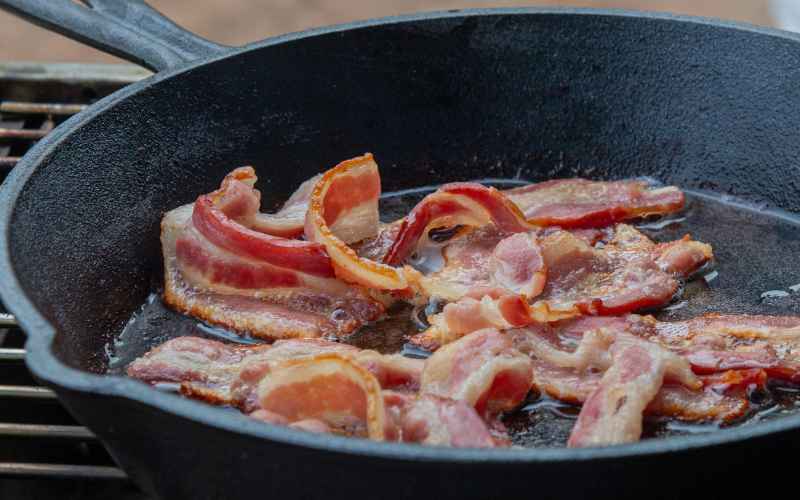
A skillet provides direct control over heat and crispness. Low to medium heat allows a few strips to warm gradually while their natural fat helps refresh the surface without needing additional oil.
Toaster Oven
The toaster oven is convenient for smaller batches when you do not want to heat a full-size oven. It delivers steady dry heat and can restore a pleasantly crisp texture with relatively little preparation.
Oven Broiler
The broiler provides intense direct heat that can crisp bacon very quickly. Because the strips can burn within a short time, this method requires close monitoring and works best as a brief finishing technique.
| Method | Best For | Approximate Time | Expected Texture |
|---|---|---|---|
| Air Fryer | Small to medium batches | 2-4 minutes | Very crisp |
| Oven | Large batches | 5-10 minutes | Evenly crisp |
| Microwave | One or two servings | 20-60 seconds | Warm, slightly softer |
| Skillet | A few strips | 2-4 minutes | Crisp with controlled browning |
| Toaster Oven | Small batches | 4-7 minutes | Crisp and evenly heated |
| Oven Broiler | Quick finishing | 1-2 minutes | Extra crisp with higher burn risk |
2. How to Reheat Bacon and Keep Every Strip Crispy
Crispy reheated bacon depends on controlled heat, proper spacing, and removing excess grease as the strips warm.
How to Reheat Bacon in the Air Fryer
The air fryer is a quick and efficient option for reheating small to medium batches of bacon. Its circulating heat helps crisp the surface evenly while reducing the chance of soggy spots.
- Preheat the air fryer to around 350°F if your model benefits from preheating.
- Arrange the bacon in a single layer with minimal overlapping.
- Reheat for about 2 to 4 minutes, depending on thickness and preferred crispness.
- Check thin strips early because they can become overly crisp very quickly.
- Transfer the bacon to a paper towel-lined plate to absorb excess grease.
- Serve immediately while the texture is still crisp and warm.
How to Reheat Bacon in the Oven
The oven is better suited to larger portions because it can hold more strips without overcrowding. Even dry heat helps the bacon warm gradually and maintain a consistent texture across the entire batch.
- Preheat the oven to 350°F to 375°F.
- Line a baking sheet with foil or parchment for easier cleanup.
- Place an oven-safe rack over the tray when possible to let grease drip away.
- Arrange the bacon in a single layer without stacking the strips.
- Reheat for about 5 to 10 minutes, checking earlier for thinner bacon.
- Remove the bacon once it is hot and crisp, then drain briefly on paper towels.
- Serve right away for the best texture.
3. Crucial Tips to Keep Reheated Bacon Crispy, Not Greasy
The difference between crisp bacon and greasy bacon often comes down to how heat and rendered fat are managed. A few simple adjustments can help the strips stay firm, flavorful, and pleasantly crisp after reheating.
- Skip extra oil: Bacon already contains enough natural fat, so adding more oil usually makes the surface greasy rather than crisp.
- Use a single layer: Arrange the strips without stacking them so hot air or direct heat can reach each piece more evenly.
- Drain excess grease: Transfer reheated bacon to a paper towel-lined plate for a short time to absorb fat from the surface.
- Keep the heat moderate: Excessively high temperatures can burn the edges before the center warms properly, especially with thin bacon.
- Reheat only until hot: Bacon is already cooked, so prolonged heating can make it overly hard, brittle, or dry.
- Use a rack in the oven: An oven-safe wire rack allows rendered grease to drip below the bacon instead of collecting underneath the strips.
- Serve immediately: Bacon can soften as it cools and steam settles on the surface, so it is best enjoyed soon after reheating.
>>> Read More: How to Reheat Steak in Air Fryer Without Sacrificing Quality
4. Bacon Texture FAQs
Reheating bacon well is mostly about controlling fat, heat, and timing so the strips stay crisp instead of turning oily or tough.
Can you reheat bacon without adding oil?
Yes, bacon can be reheated without adding oil because it already contains enough natural fat. Dry-heat methods such as the air fryer, oven, or skillet are usually sufficient to warm the strips and restore crispness.
How do you keep bacon crispy instead of greasy?
Use moderate heat, avoid overcrowding, and let excess fat drain away as the bacon reheats. Placing the strips on a wire rack or briefly transferring them to paper towels afterward can help reduce surface grease.
Does thick-cut bacon need a different reheating method?
Thick-cut bacon can be reheated using the same methods as regular bacon, but it generally needs a little more time. Moderate heat works best because it allows the center to warm through without burning or over-crisping the edges.
How should leftover cooked bacon be stored safely?
Before reheating, cooked bacon must be cooled and stored properly in the refrigerator or freezer. Following standard USDA food safety guidelines for cooked meats ensures that leftovers remain safe to eat within 4 to 5 days when kept below 40°F.
5. Final Words
Crispy bacon can make a reheated breakfast feel far more satisfying when the strips are warmed with the right balance of heat and timing.
Choosing the best approach to how to reheat bacon means considering portion size, thickness, and how much crispness you want to restore. Avoid extra oil, drain excess grease, and serve the bacon promptly for better texture.